A publication of Loma Paloma Press, 2025

© davidwestonmarshall.com
At Home in Hellas is available from Amazon.com, its global affiliates, and booksellers worldwide, in hardback, paperback, and e-book formats.
Book illustrations and additional images appear at the bottom of this page.
***************************
WAKE UP IN THE WORLD OF ANCIENT GREECE
Walk with Hellenic men and women, young and old, through the trials and triumphs of daily life. Work with them to shepherd the flocks, farm the fields, craft the goods, trade the wares, and sail their ships to distant shores. Watch them prosper in times of peace and fight in furious wars. Witness their reverence for the natural world, celestial mores, and ancient wisdom that guides them to the height of Classical Culture.
FEEL THE VITALITY—SAVOR THE WISDOM— EMBRACE THE IMPASSIONED SPIRIT
***************************
PREFACE
The world is well-aware of the astonishing impact of ancient Greek culture on western civilization, and the proliferation of that culture around the globe. Hellenic contributions are apparent in our social and economic systems, and in our political experimentations ranging from democracy to dictatorship.
Hellenes absorbed eastern lore and formed the foundations of our science, philosophy, spirituality, ethics, literature, art, architecture, music, theater, and athletics. Their mythology continues to infuse our popular culture. The material items they left behind form the core of our museums. Even our daily vocabulary, with words like museum from the Greek word muse, reveals our indebtedness to the world they created three thousand years ago.
Every school child knows the names of Achilles, Odysseus, Helen, Homer, Sophocles, Socrates, Plato, Aristotle, and other renowned persons of that vibrant civilization. But few know about the daily lives of the common people who worked and played, hoped and feared, lived and loved, much as we do today. Abundant information is available in the form of ancient literature and archeological evidence. But modern insight into lifeways is lacking.
The purpose of At Home in Hellas is to reveal the daily lives of the ancient Greeks by presenting a wealth of factual information in the framework of a lively fictional narrative. The narrative portrays the lives of Astrape (ä-strä’pē), his twin brother Bronte (brōn’tē), grandfather Pappos (pä’pōs), grandmother Ama (ä’mä), wife Tempe (tĕ’mpē), and grandson Pais (pās).
Their story emerges in the context of actual historical and cultural settings, and focuses on Athens and Attica during the Hellenic (Classical) Era, 495-350 BC. Ancient eyewitnesses who left written records are quoted in the text to provide the reader with an authentic feel for Hellenic thought and expression.
The narrative also features the tales of the forty-eight classical constellations, compiled from literature that spans nine hundred years from Homer (c. 750 BC) to Claudius Ptolemy (c. 150 AD). These timeless tales have captured the human imagination from prehistory to the present, and provide a compendium of Greek mythology, practical astronomy, philosophical speculation on the cosmos, and the fundamental moral beliefs of the Hellenes. Additional technical information, maps, charts, diagrams, and illustrations appear in the author’s earlier non-fiction publication: Ancient Skies (W.W. Norton, 2018).
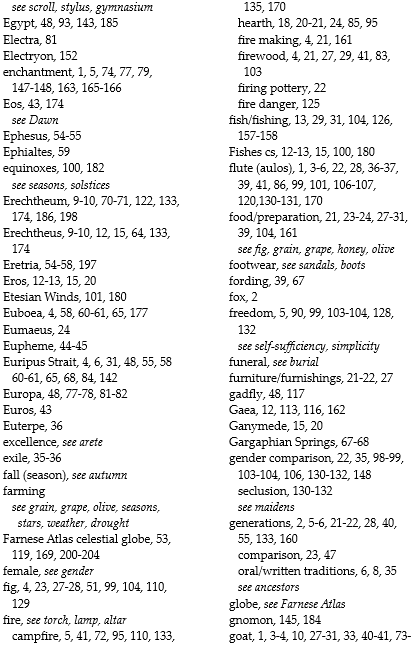
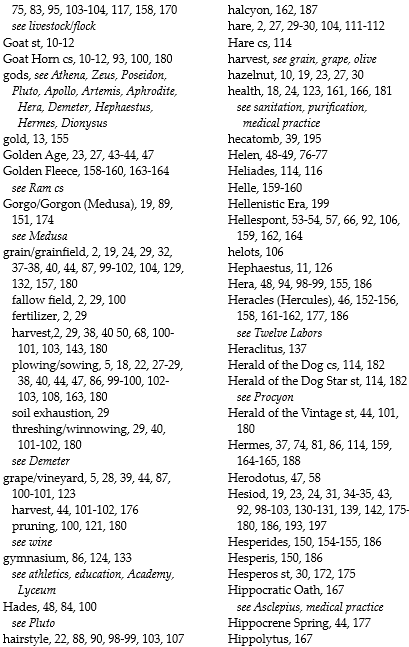
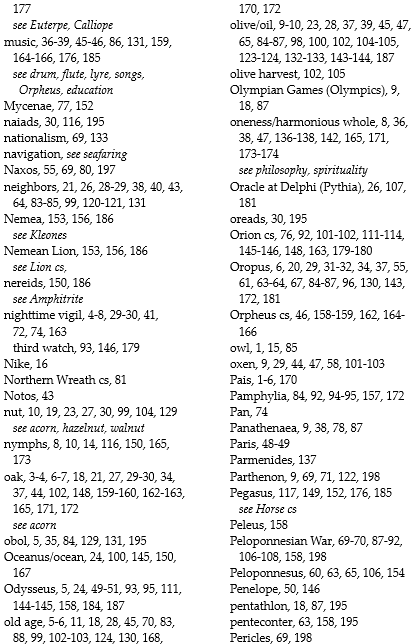
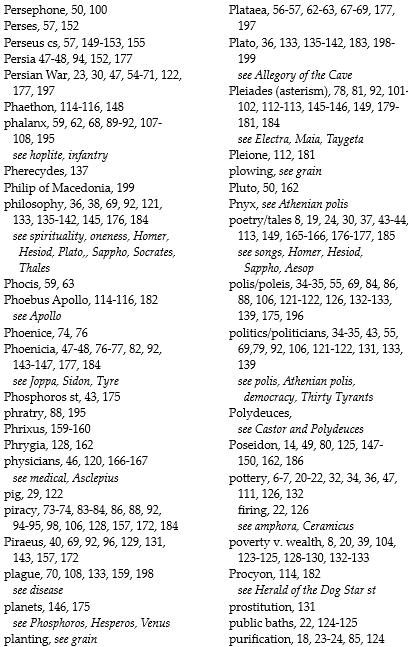
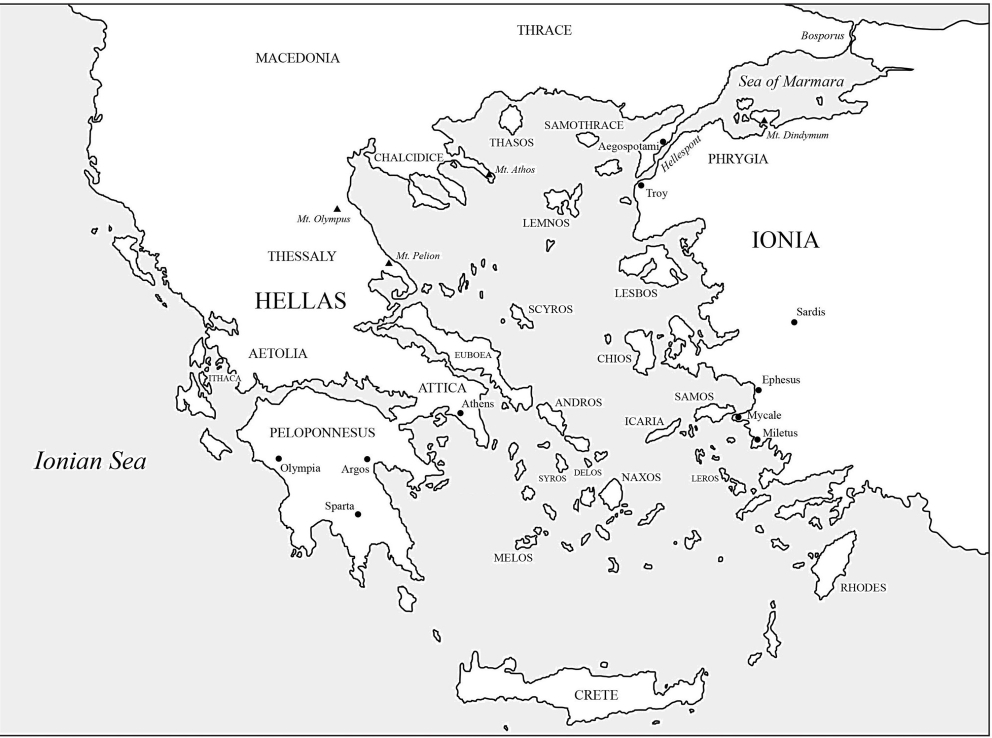
Readers who wish to dig deeper into the true historical context of At Home in Hellas may use the maps, endnotes, works cited, glossary, timeline, appendices, and index.
***************************
TABLE OF CONTENTS

***************************
Appendix 1. GLOSSARY
amphora (pl. amphorae): large jugs with narrow necks and double handles used to store and ship water, wine, and olive oil.
aulos: a flute-like woodwind instrument.
cithara: a lyre. The word is ancestral to guitar.
drachma: a standard silver coin used in classical Greece. At the time of the Persian wars its value was equivalent to that of one day’s wage for skilled labor.
dryad: nymphs that inhabit oak trees.
hecatomb: the sacrifice of one hundred cattle to the gods.
hoplite: a heavily armed and armored infantryman.
naiad: nymphs that inhabit freshwater sources.
obol: a standard coin. Six obols equaled a drachma. At the time of the Persian wars its value was equivalent to that of one day’s wage for unskilled labor.
oread: nymphs that inhabit mountains.
pentathlon: a highly regarded athletic contest consisting of five events: the sprint, long jump, wrestling, discus throw, and javelin throw.
penteconter: a fifty-oared galley that served as a merchant vessel or warship.
phalanx: a tight formation of hoplites with shields overlapping and spears thrust forward.
phratry: a kinship clan that accepted boys as members when they came of age, typically at fourteen years.
polis (pl. poleis): a city-state, with citizens that inhabited a capital city and its outlying villages and countryside. Athens was a polis that included the capital city and surrounding area of Attica. An acropolis was a high point within a polis, which served as a temple site and stronghold.
rhombus: an oblong object twirled on the end of a long cord to produce a whirring sound. It was often used to communicate with spirits or deities.
satyr: woodland spirits with horse-like ears and tails. They often accompany Dionysus and Pan.
sophist: a teacher of philosophy, rhetoric, music, mathematics, and other subjects designed to provide a broad education for students. Some sophists were condemned for focusing on the art of persuasion and exploitation, and for charging their eager students inflated tuitions.
stade: a unit of measure that varied from country to country. In Attica, one stade was equivalent to 606 feet. Stade measurements in this book include 2 stades (just under a quarter mile), 4 stades (just under a half mile), 20 stades (2.3 miles), 24 stades (2.8 miles), 29 stades (3.3 miles), 44 stades (5 miles), 48 stades (5.5 miles), 51 stades (5.8 miles), 100 stades (11.5 miles), and 230 stades (26.4 miles). An area that was one-half stade by one stade was equivalent to four acres.
titans: twelve immortals that preceded and sired the gods.
trireme: a warship which typically held 170 oars arranged in three banks, and a crew of about two hundred men.
tympanum: a shallow-framed skin drum struck with the hand.
***************************
Appendix 2. TIMELINE OF APPROXIMATE DATES, BC.
Fictional events are italicized.
1200 Trojan War
750 Homer writes the Iliad and Odyssey.
700 Hesiod writes Works and Days and Theogony.
624 Thales of Miletus is born. He lives until 546.
547 Cyrus, King of Persia, conquers Hellenic colonies in Ionia.
499 The Ionian Revolt begins as Hellenes rebel against Persian rule.
495 Astrape’s grandfather, Pappos, is born.
492 The Persian invasion of mainland Hellas, led by Mardonius, falls victim to a storm off the coast of Mt. Athos.
490 Darius, King of Persia, sends an invading force against Eretria and Athens. It is defeated at Marathon and withdraws.
480 Xerxes, King of Persia, invades Hellas. His massive army defeats a Hellenic coalition led by Leonidas and three hundred Spartans at Thermopylae. Persians ravage the countryside and destroy the Athenian Acropolis. The Hellenic fleet defeats the Persian fleet at Salamis. Xerxes withdraws but leaves a large army in Hellas.
479 At the Battle of Plataea, a Hellenic coalition led by Spartans and Athenians defeats the Persian army, forcing it to withdraw from Hellas. Athens emerges as a maritime power and takes the offensive against Persians in Ionia. The Classical Age begins.
478 The Delian League is founded as a maritime alliance, but becomes an Athenian Empire. About three hundred poleis ultimately join.
470 Athens forces Naxos to remain in the Delian League.
449 The last Ionian cities are freed from Persian rule.
447 Pericles begins rebuilding the Acropolis following its destruction by Persians in 480. Work begins on the Parthenon, which will be completed in 438.
440 Socrates begins teaching in Athens.
431 The Peloponnesian War commences when Sparta challenges Athenian military dominance and begins a series of annual invasions.
430 Plague breaks out in Athens.
428 Plato is born. He dies in 348.
426 The Athenian plague subsides after one-fourth of the population perishes, including Pericles.
425 Astrape and Bronte are born. Their mother dies in childbirth.
421 A truce halts the Peloponnesian War, but both sides violate terms. The Erechtheum is begun, and completed in 406.
420 Astrape and Bronte listen to Pappos’ stories of the constellations.
416 Athens conquers neutral Milos, killing or enslaving the inhabitants.
415 Athens launches a fleet to capture Syracuse. Sea raiders from Pamphylia ravage the unprotected Attic coast.
413 The Athenian fleet is defeated at Syracuse. Spartans establish a fortress in Attica at Decelea and free Athenian slaves from mines.
407 Astrape enters military training.
405 The naval battle of Aegospotami results in Spartan victory over the Athenian fleet. Astrape begins military service.
404 Athens is blockaded and surrenders her fleet and fortifications to Sparta. Athens is placed under the rule of the Thirty Tyrants which promptly executes hundreds of political rivals.
403 The Thirty Tyrants are deposed and replaced by a democracy.
400 Astrape and Tempe are married.
399 Socrates is executed.
395 The Corinthian War commences in opposition to Spartan dominance. The alliance consists of Athens, Thebes, Corinth, Argos and other poleis. The war continues intermittently until 371.
390 The Athenian army under Iphicrates defeats the Spartans. Astrape participates.
380 Plato writes The Republic.
375 Astrape voyages to Joppa.
371 Thebans defeat Spartans at the Battle of Leuctra.
350 Astrape rescues Pais, and reflects on his life during one winter night.
338 Philip of Macedonia’s victory over Athens and Thebes at Chaeronea makes him overlord of Hellas. He creates a federation and plans an invasion of Asia.
334 Alexander the Great, Philip’s son, launches an invasion of Persia.
323 Alexander dies. The Hellenistic Age begins.
***************************
Appendix 3. FARNESE ATLAS CELESTIAL GLOBE
The oldest surviving images of the Greek constellations are depicted on the Farnese Atlas—a Roman sculpture copied from a Greek original of the second century BC. The marble sculpture portrays the titan Atlas holding a large celestial globe on his shoulders. The globe depicts all but a few of the forty-eight classical constellations. Hipparchus, the famed astronomer (c. 190-120 BC), likely contributed to the creation of the Greek celestial globe in the second century BC. The later Roman copy is in the Farnese Collection, National Archeological Museum, Magna Graecia, Naples, Italy.
Note: When observing a celestial globe, one must remember that the sphere represents the sky, with the Earth inside at the center. It is as if the viewer is standing in outer space, beyond the constellations, and is looking back toward Earth. That is why celestial images appear in reverse, and some have their backs to the viewer as they fix their gaze on Earth.

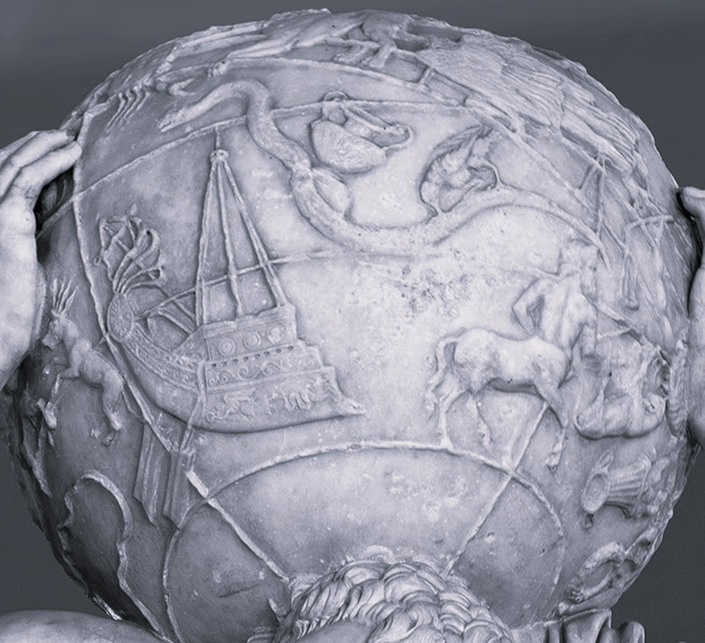
Constellations (left to right; top to bottom): Crab (Cancer), Lion (Leo), Maiden (Virgo), Hydra, Crater, Crow (Corvus), Dog (Canis Major), Argo (Argo Navis), Centaur (Centaurus), Wild Animal (Lupus), Scorpion (Scorpius), River (Eridanus), Incense Altar (Ara), Southern Wreath (Corona Australis). National Archeological Museum, Magna Graecia, Naples, Italy.

Constellations (left to right; top to bottom): Perseus, Charioteer (Auriga), Twins (Gemini), Cassiopeia, Andromeda, Fishes (Pisces), Ram (Aries), Bull (Taurus), Orion, Sea Monster (Cetus), River (Eridanus), Hare (Lepus). National Archeological Museum, Magna Graecia, Naples, Italy.

Constellations (left to right; top to bottom): Dragon (Draco), Cepheus, Bird (Cygnus), Cassiopeia, Andromeda, Perseus, Eagle (Aquila), Dolphin (Delphinus), Fishes (Pisces, upper fish), Horse (Pegasus), Ram (Aries), Goat Horn (Capricornus), Water Bearer (Aquarius), Fishes (Pisces, lower fish). National Archeological Museum, Magna Graecia, Naples, Italy.
Constellations (left to right; top to bottom): Bootes, Snake (Serpens), Northern Wreath (Corona Borealis), Kneeler (Hercules), Dragon (Draco), Lyre (Lyra), Bird (Cygnus), Snake Holder (Ophiuchus), Eagle (Aquila), Dolphin (Delphinus), Horse (Pegasus), Incense Altar (Ara), Scorpion (Scorpius, stinger), Southern Wreath (Corona Australis), Archer (Sagittarius), Goat Horn (Capricornus), Water Bearer (Aquarius). National Archeological Museum, Magna Graecia, Naples, Italy.

Constellations (left to right; top to bottom): Bootes, Snake (Serpens), Northern Wreath (Corona Borealis), Kneeler (Hercules), Dragon (Draco), Lyre (Lyra), Bird (Cygnus), Snake Holder (Ophiuchus), Eagle (Aquila), Dolphin (Delphinus), Horse (Pegasus), Incense Altar (Ara), Scorpion (Scorpius, stinger), Southern Wreath (Corona Australis), Archer (Sagittarius), Goat Horn (Capricornus), Water Bearer (Aquarius). National Archeological Museum, Magna Graecia, Naples, Italy.
***************************
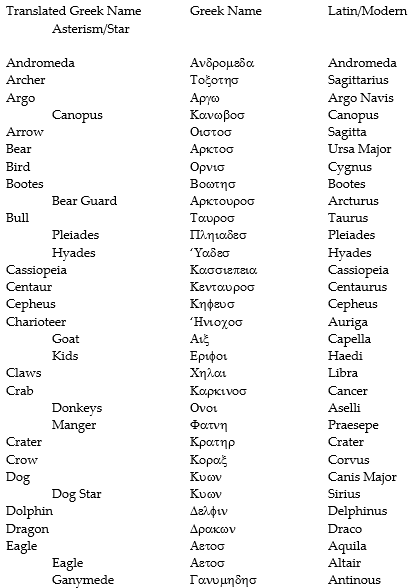
Appendix 4. GREEK CONSTELLATION, ASTERISM, AND STAR NAMES

***************************
Appendix 5. MODERN CONSTELLATION NAMES


***************************






***************************
AT HOME IN HELLAS BOOK ILLUSTRATIONS
If you wish to copy and use an image or images, you must cite the following source: http://www.davidwestonmarshall.com/at-home-in-hellas/
For related images, see on this website: RESEARCH & PUBLICATIONS/Ancient Skies, COLLECTIONS/Ancient Mediterranean Collection, and COLLECTIONS/Portable Water and Food Ware Collection.
The images that follow have file names that begin with the chapter number, e.g. “1a.” Images in addition to those found in the book have file names that begin with, e.g. “1a1.”
***************************
MAPS


***************************
BOOK IMAGES BY CHAPTER NUMBER

1a. The fauna of ancient Greece included wild boars, lions, and deer, depicted on this vase painting. Ceramicus Archeological Museum, Athens. Photo by author.
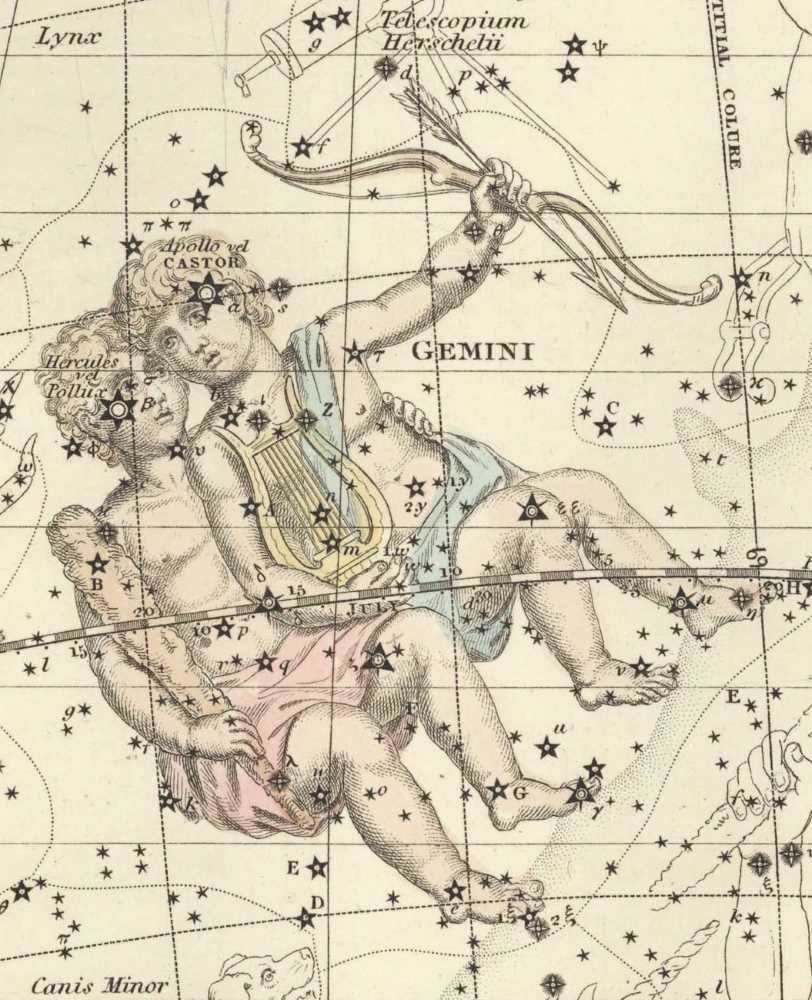
2a. The Twins (Gemini), Castor and Polydeuces. Celestial Atlas by Alexander Jamieson, 1822.
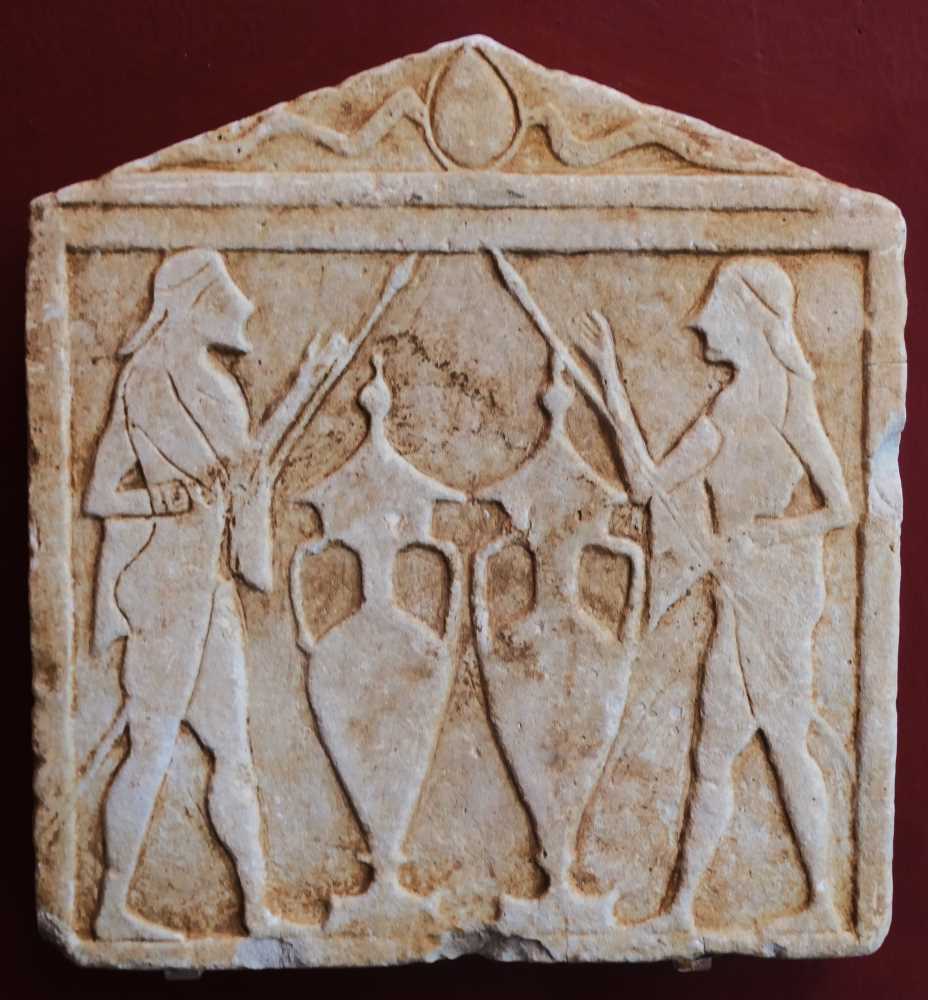
2b. The Dioscuri—the twin brothers Castor and Polydeuces. Marble relief, c. 500 BC. Archeological Museum, Sparta. Photo by author.

3a. Clay toys, classical era. Archeological Museum, Corinth. Photo by author.

3b. Swallows in flight. Fresco, 1600-1500 BC. from Akrotiri on the island of Thera (Santorini), National Archeological Museum, Athens. Photo by author.
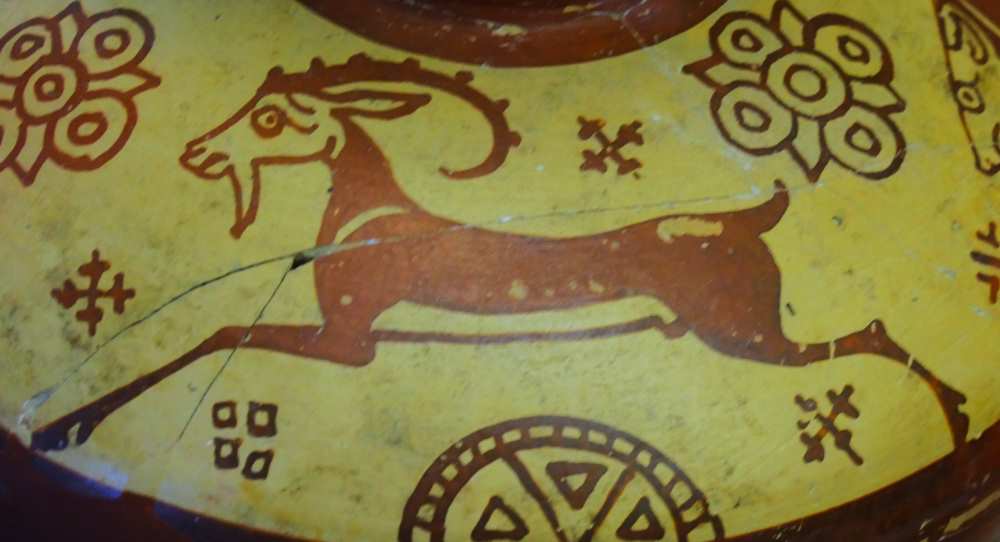
4a. Wild Goat. Vase painting, 660-500 BC. Archeological Museum, Island of Rhodes, Greece. Photo by author.

5a. Styluses with sharp ends for etching wax tablets, and flat ends for erasing etches by smoothing them out, classical era. Archeological Museum, Corinth. Photo be author.

5b. Apollo with his tortoise shell cithara (lyre). Vase painting, c. 470 BC. Archeological Museum, Delphi, Greece. Photo by author.
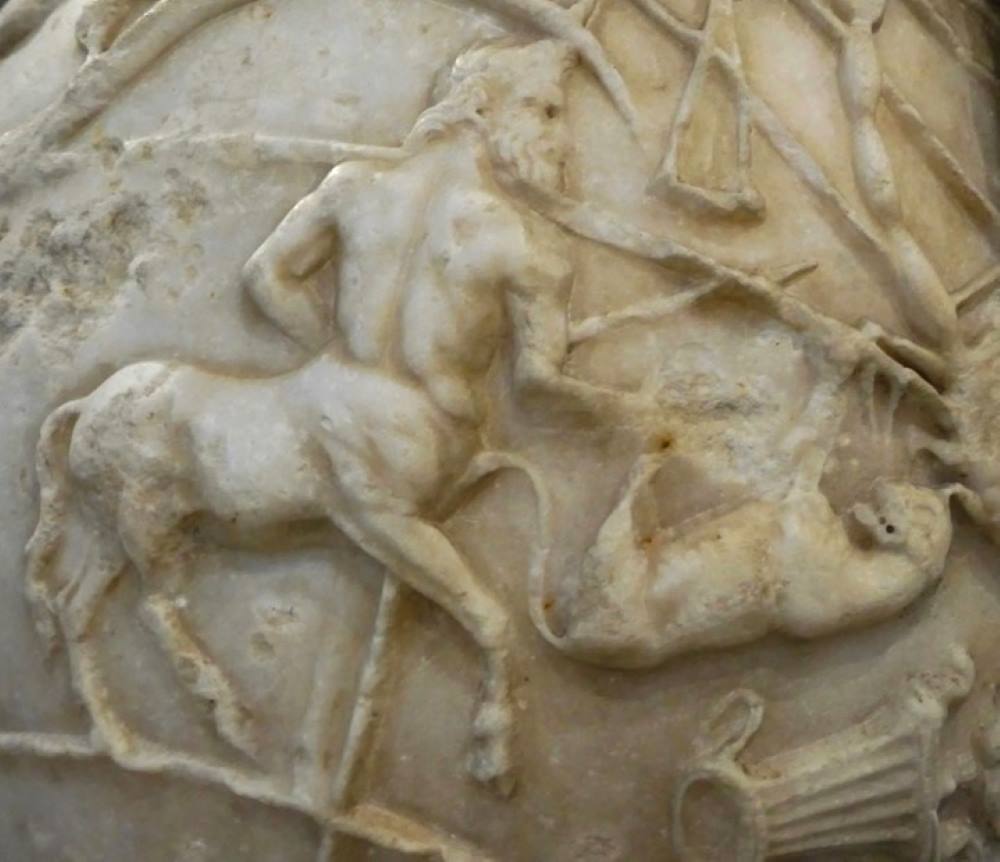
6a. Centaur (Centaurus), Wild Animal (Lupus), and Southern Wreath (Corona Australis) depicted on the Farnese Atlas Celestial Globe. See Appendix 3. National Archeological Museum, Magna Graecia, Naples, Italy. Photo by author.

6b. Trojan Horse replica used in the movie Troy in 2004. It now watches over the Hellespont at Canakkale, Turkey, near Troy. Photo by author.

7a. Hoplite warriors are depicted on this memorial plate that mourners left at the burial site of Plataeans who died in the Battle of Marathon. Marathon Museum, Attica, Greece. Photo by author.

7b. Hoplites in phalanx. Spartan vase painting, classical era. National Museum of Magna Graecia, Reggio Calabria, Italy. Photo by author.
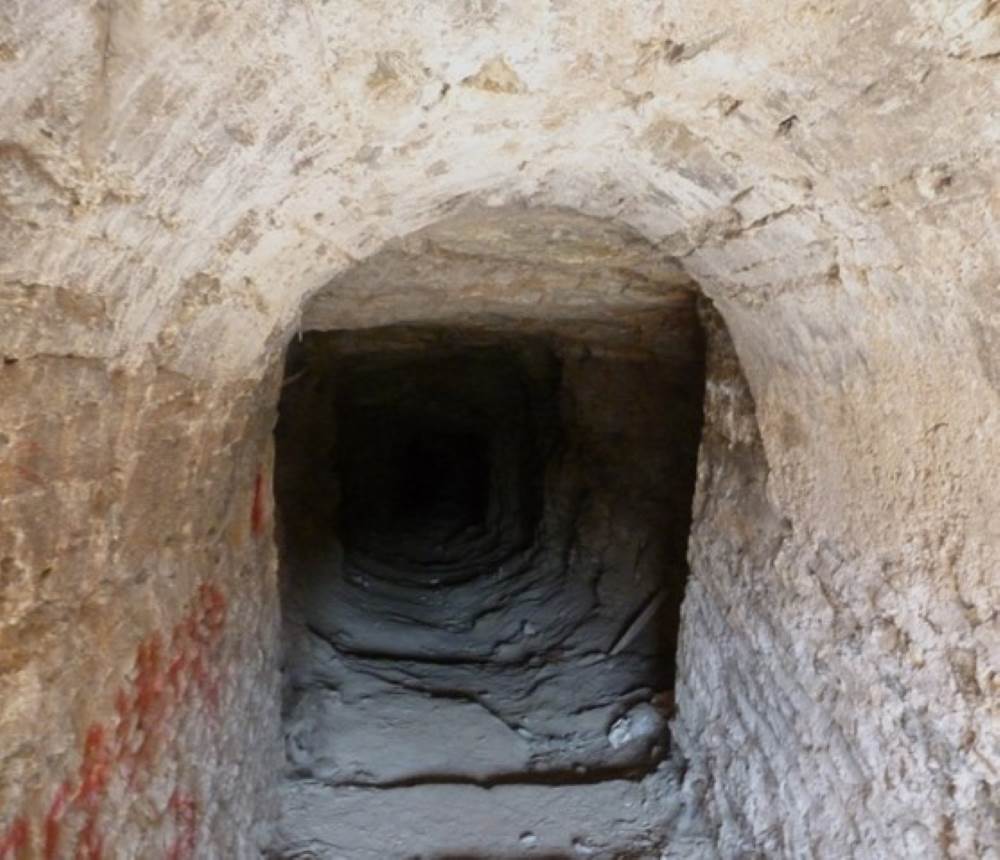
8a. Entrance to one of the ancient Laurium Mines. The silver from these mines funded the building of a fleet of triremes that defeated the Persians at the Battle of Salamis in 480 BC. Following the victory, Laurium silver paid for construction of the Parthenon, Erechtheum, and other temples on the Athenian Acropolis. These temples symbolize the height of classical culture. Photo by author.
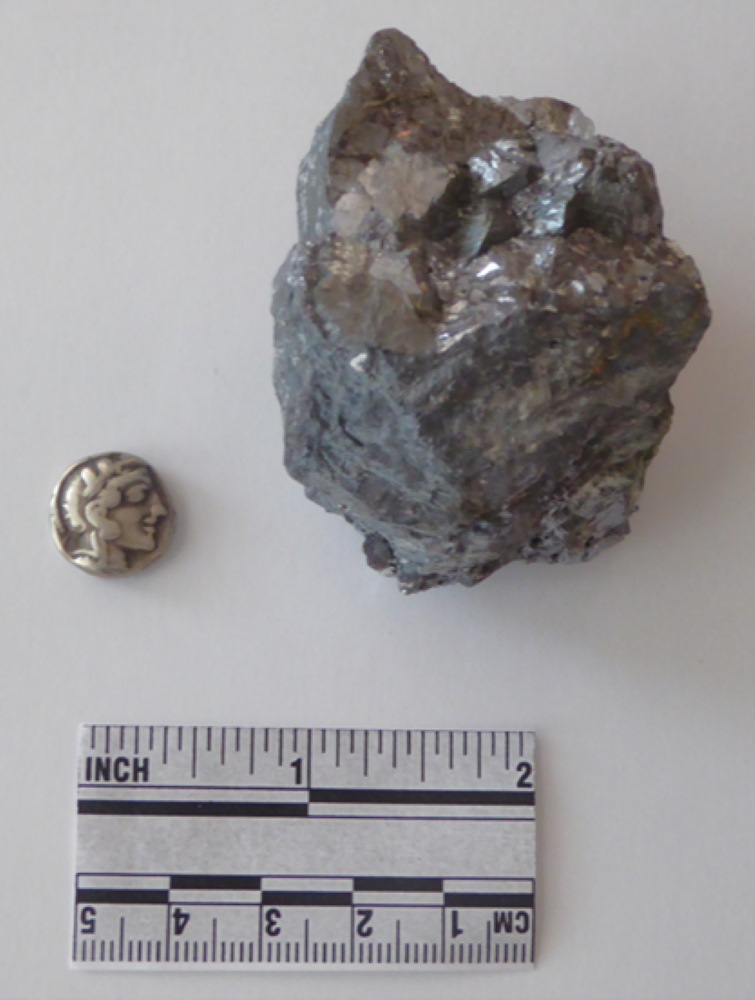
8b. Athenian silver drachma extracted and minted from ore of the Laurium mines in the 5th century BC. Marshall Collection, Aledo, Texas. Photo by author.
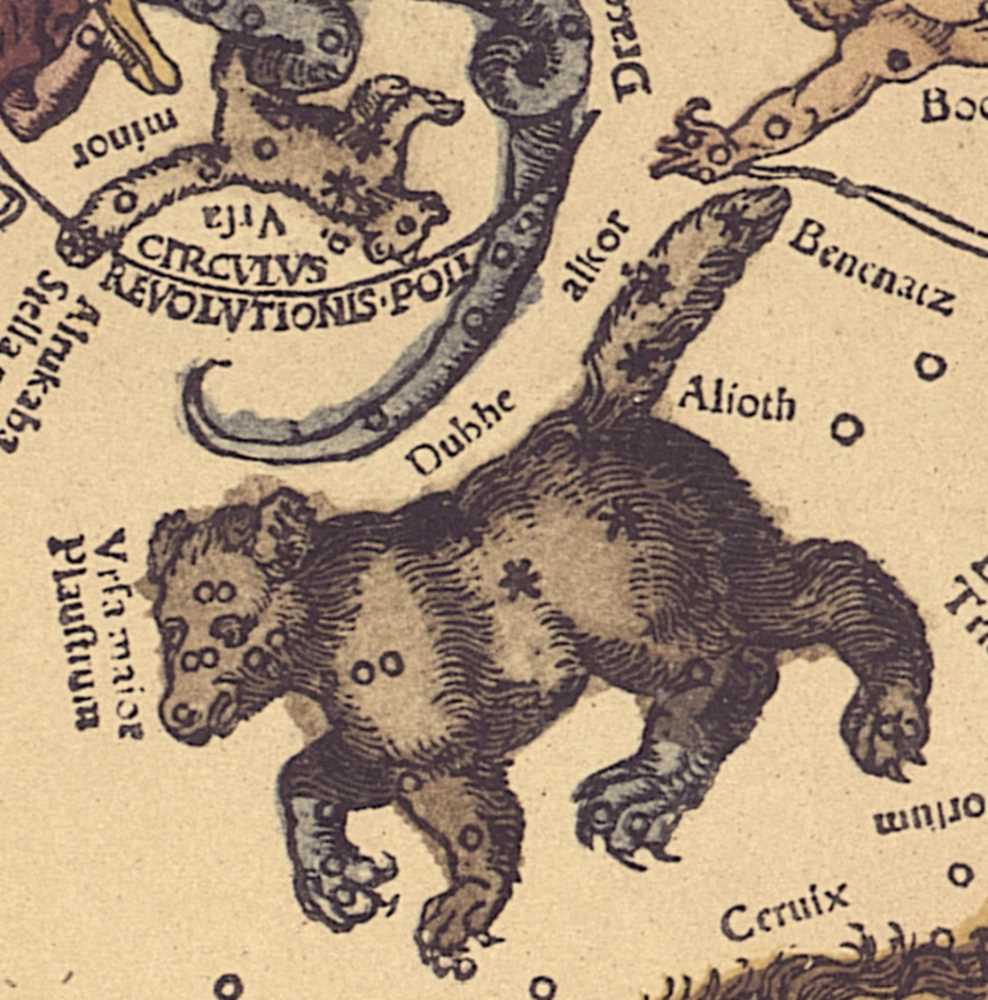
9a. Bear (Ursa Major) and Little Bear (Ursa Minor) depicted in the Astronomicum Caesareum of Petrus Apianus, 1540. Rare Books Collection, Texas Tech University, Lubbock, Texas.

9b. Zeus abducting Europa from the Phoenician shore. Stone relief, 560-550 BC. Archeological Museum, Magna Phoenicia, Palermo, Italy. Photo by author.
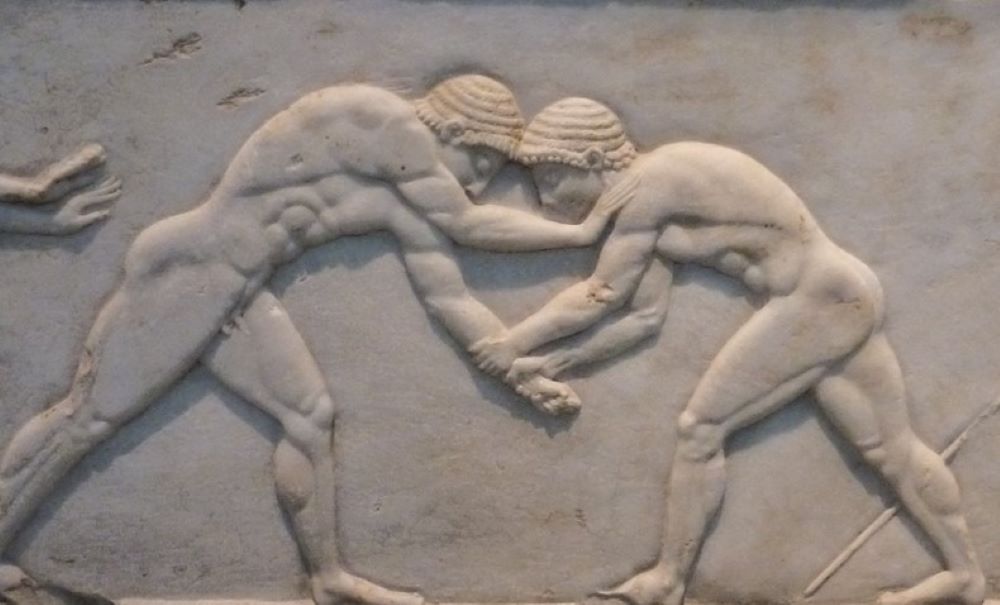
10a. Wrestlers. Marble relief, c. 510 BC. National Archeological Museum, Athens. Photo by author.

10b. Bronze helmets, 7th to 5th centuries BC. Archeological Museum, Olympia, Greece. Photo by author.

11a. Hellenic ship with helmsman observing the sky. Vase painting from Attica, 5th century BC. Archeological Museum, Magna Phoenicia, Palermo, Italy. Photo by author.

11b. Hoplite warriors in mortal combat, armed with bronze helmets, breastplates, greaves, shields, swords, and spears. Vase painting from Athens, 520-510 BC. Getty Museum, Malibu, California. Photo by author.
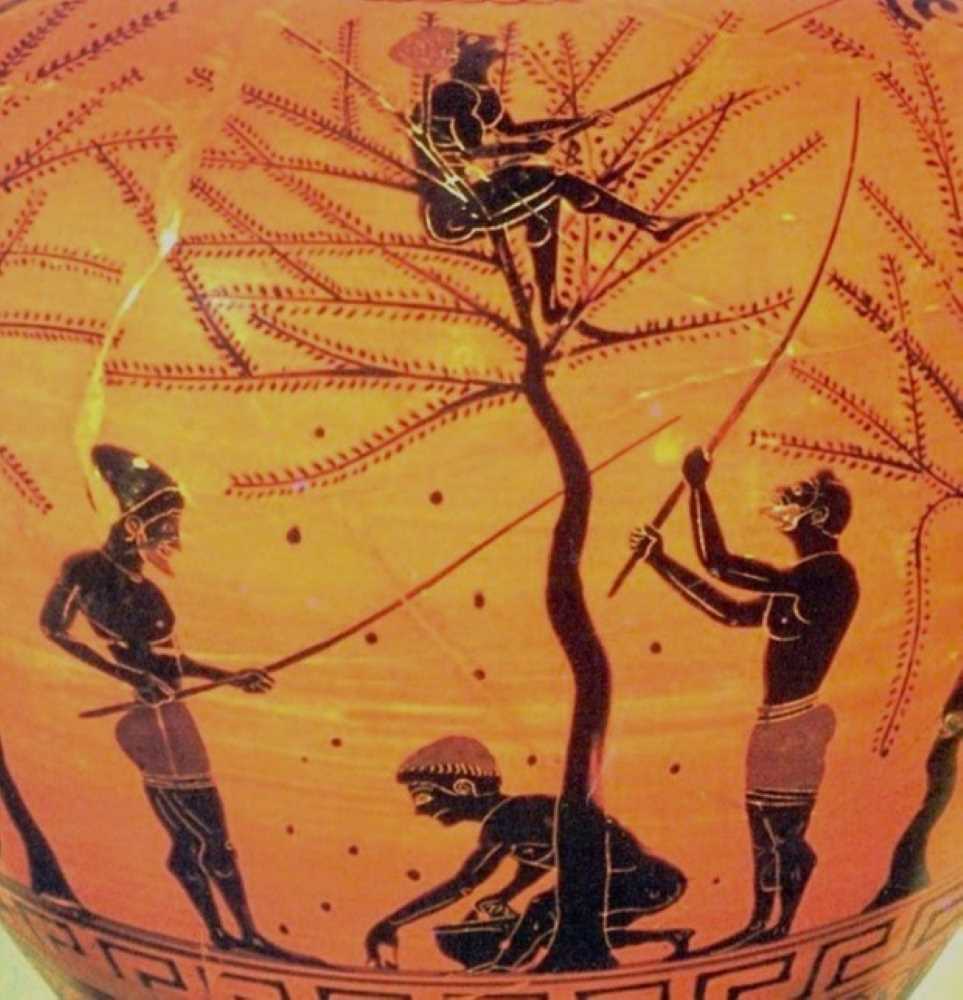
12a. Olive harvest. Vase painting, c. 520 BC. British Museum, London.

12b. Olive press, 2nd century BC. Capernaum, Israel. Photo by author.

13a. Red Deer stag. Vase painting, 525-500 BC. Archeological Museum. Island of Rhodes, Greece. Photo by author.
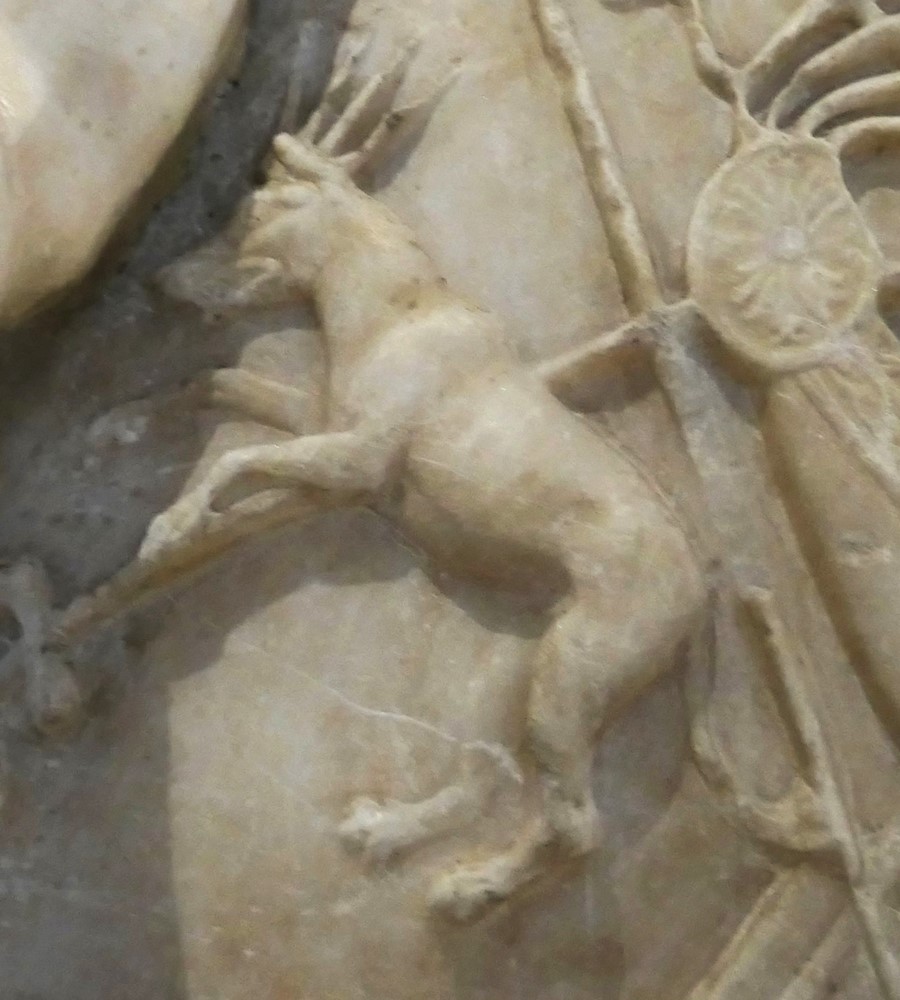
13b. Dog (Canis Major) with the brilliant light of the Dog Star (Sirius) radiating from his head. Depicted on the Farnese Atlas Celestial Globe. See Appendix 3. National Archeological Museum, Magna Graecia, Naples, Italy. Photo by author.

14a. Bronze arrowheads of Scythian archers, c. 5th century BC. Marshall Collection, Aledo, Texas. Photo by author.
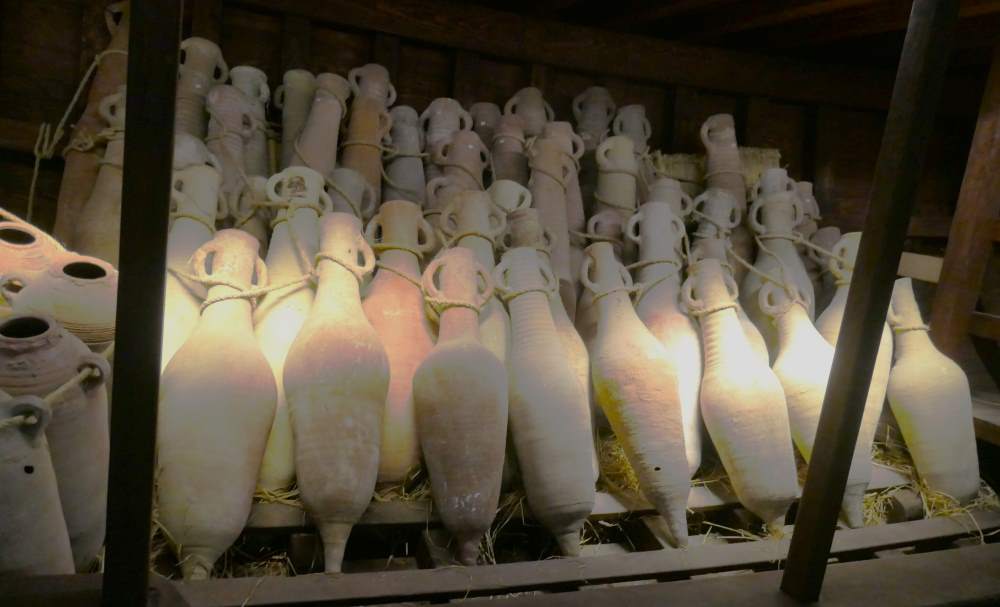
15a. Ancient method of storing amphorae in a ship’s hold. Greco-Roman Museum, Alexandria, Egypt. Photo by author.
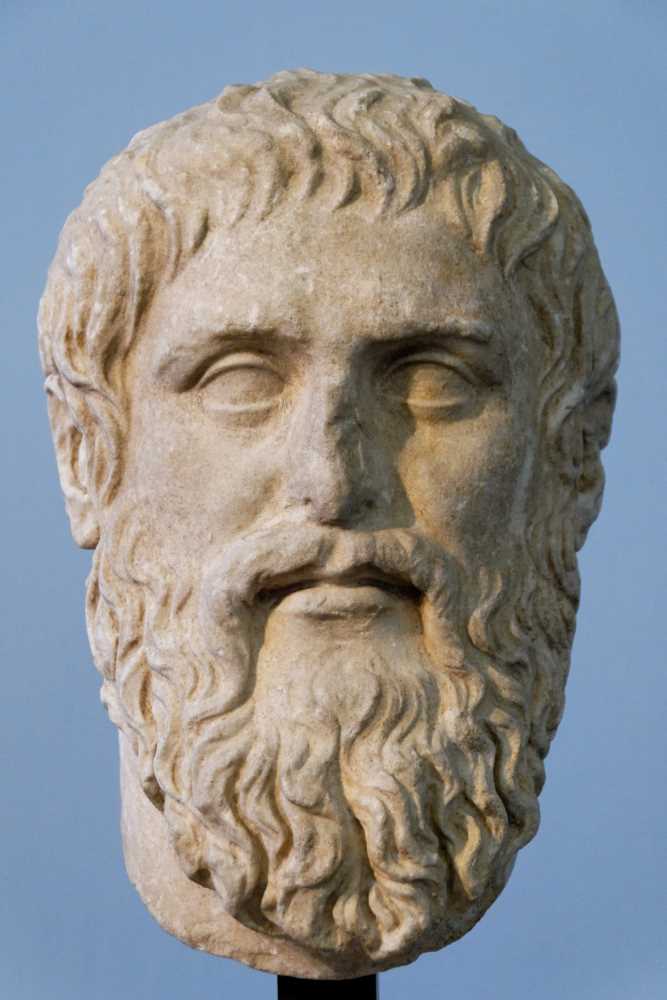
16a. Plato (c. 427-348 BC) was the student of Socrates and the teacher of Aristotle.

16b. Plato (left) and his student Aristotle (right) at Plato’s Academy. The School of Athens, painting by Raphael, 1509-1511 AD.

17a. Hellenic merchant ship, 1200-800 BC. Model at the Museum of the Sea, Island of Ithaca. Photo by author.

18a. Heracles (Hercules) with Nemean Lionskin. Marble copy of a Greek original from the 4th century BC. National Archeological Museum, Magna Graecia, Naples, Italy. Photo by author.
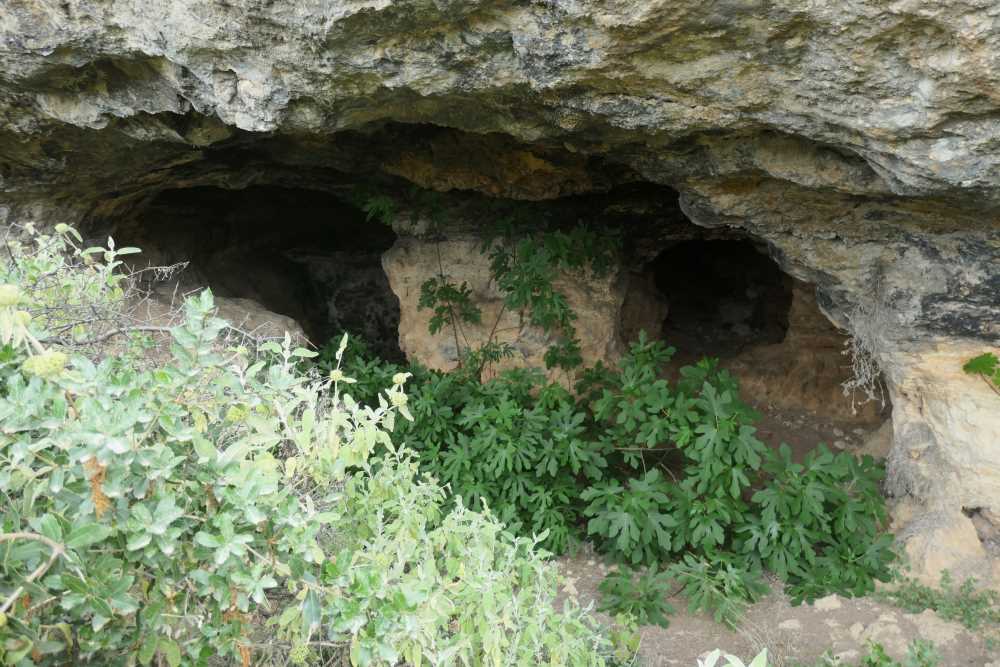
18b. Nemean Lion Cave. Kleones, Nemea, Greece. Photo by author.
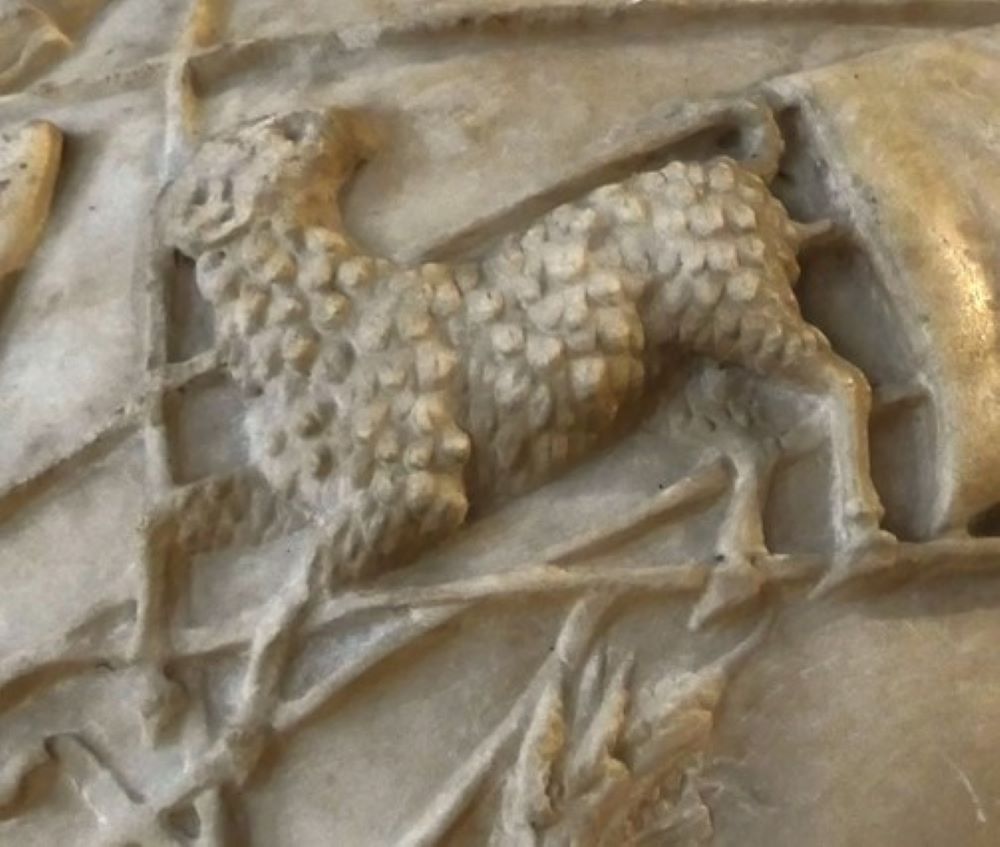
19a. Ram (Aries) depicted on the Farnese Atlas Celestial Globe. See Appendix 3. National Archeological Museum, Magna Graecia, Naples, Italy. Photo by author.

19b. Argo (Argo Navis) depicted on the Farnese Atlas Celestial Globe. See Appendix 3. National Archeological Museum, Magna Graecia, Naples, Italy. Photo by author.

20a. The Twins (Gemini). Celestial Atlas by Alexander Jamieson, 1822.
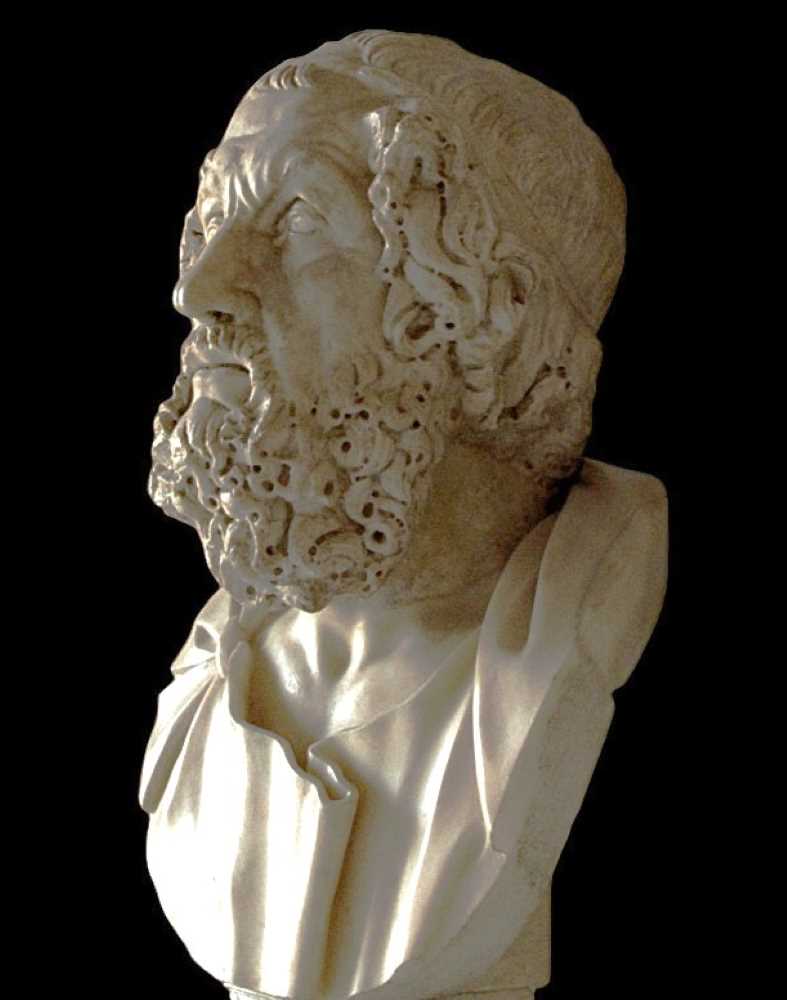
Homer, c. 750 BC.
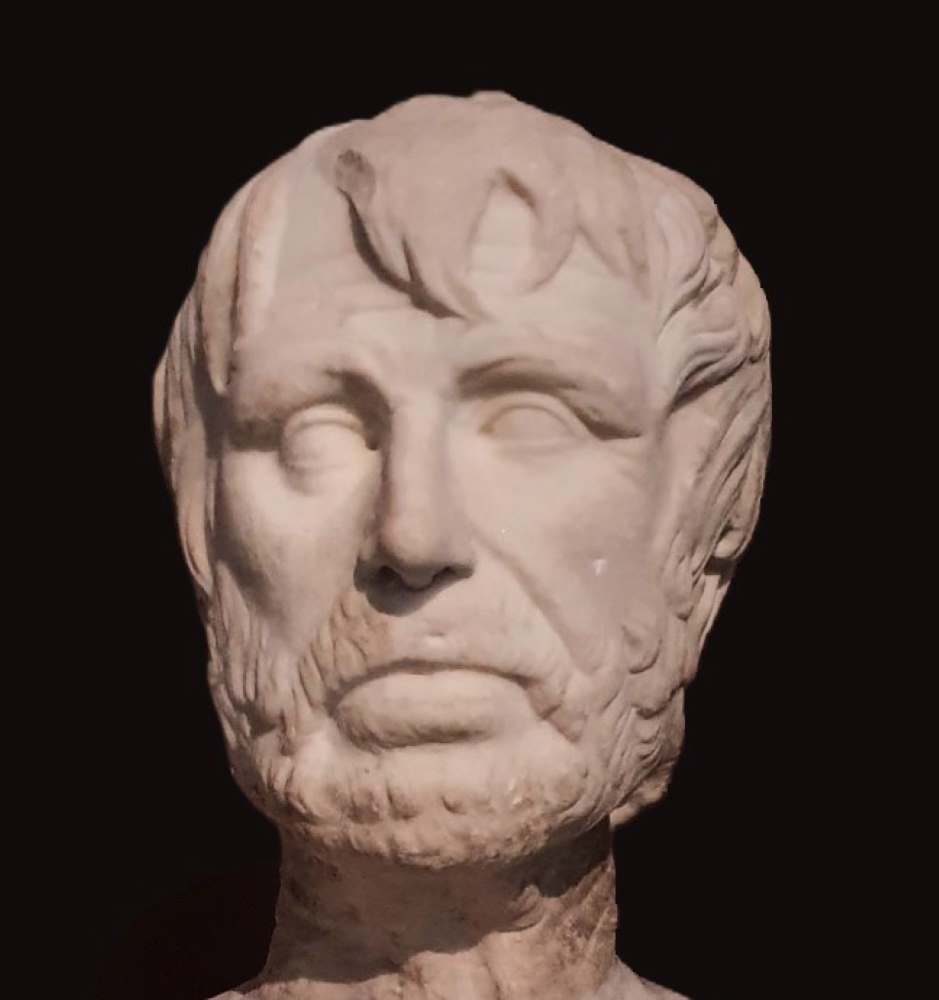
Hesiod, c. 700 BC.
***************************
ADDITIONAL IMAGES BY RELATED CHAPTER NUMBER

1a1. Head of an archaic man from Corinth, Greece. Terracotta, 600-550 BC. Archeological Museum, Magna Phoenicia, Palermo, Italy. Photo by author.

1a2. Arcadia’s rugged mountains and lush valleys viewed from the heights of Mount Kyllini. Photo by author.

2b1. The Erechtheum. Temple in marble, 421-405 BC. Acropolis of Athens. Photo by author.
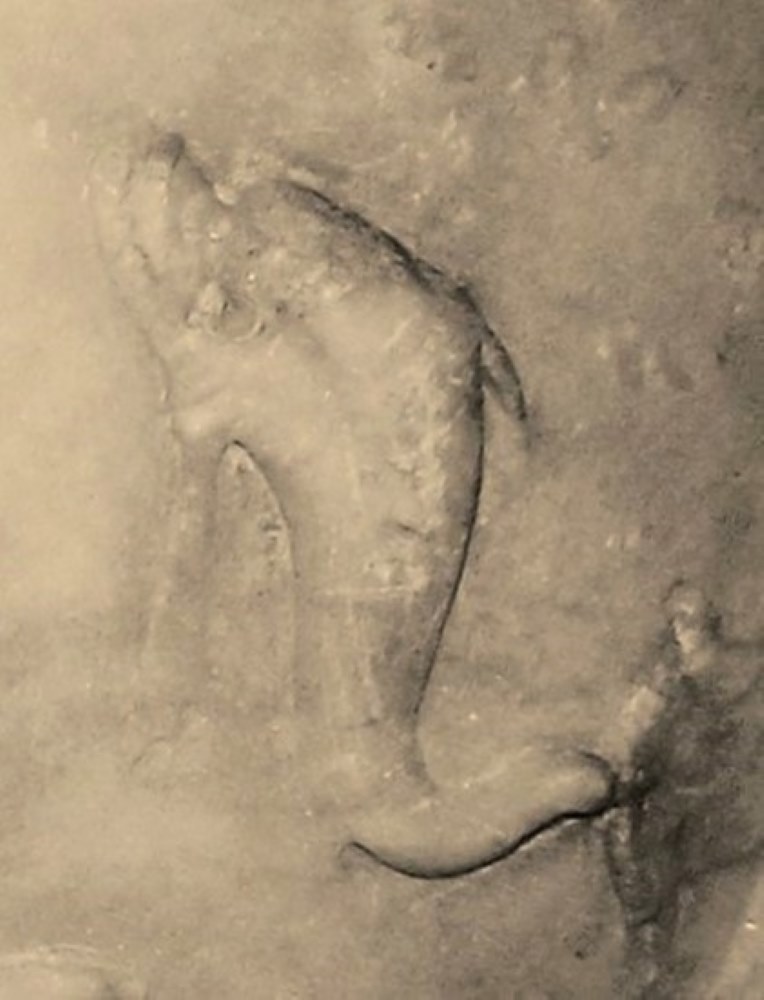
2b2. Dolphin (Delphinus) depicted on the Farnese Atlas Celestial Globe. See Appendix 3. National Archeological Museum, Magna Graecia, Naples, Italy. Photo by author.

2b3. Water Bearer (Aquarius) and Fishes (Pisces) depicted on the Farnese Atlas Celestial Globe. See Appendix 3. National Archeological Museum, Magna Graecia, Naples, Italy. Photo by author.
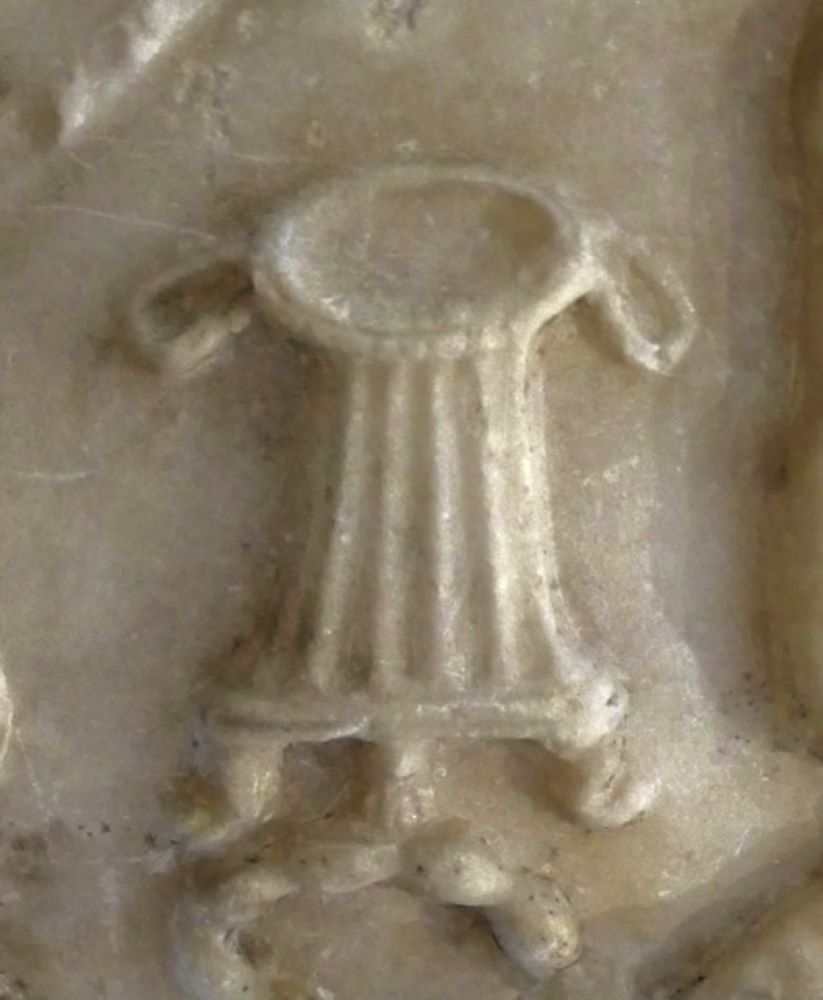
2b4. Incense Altar (Ara) depicted on the Farnese Atlas Celestial Globe. See Appendix 3. National Archeological Museum, Magna Graecia, Naples, Italy. Photo by author.
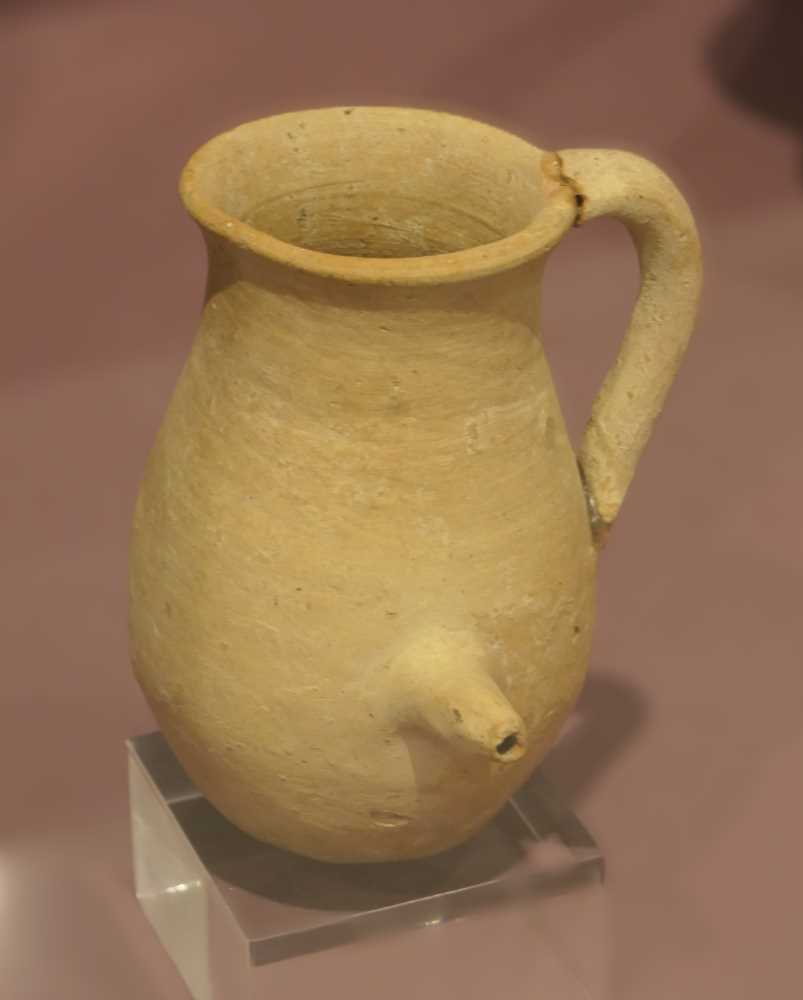
3a1. Milk feeder for a baby, with nipple on the side. Pottery, 10th century BC. Archeological Museum, Pythagoreio, Island of Samos, Greece. Photo by author.

3a2. Astragali—ankle bones of deer, used in games like dice, classical era. Archeological Museum, Corinth. Photo by author.
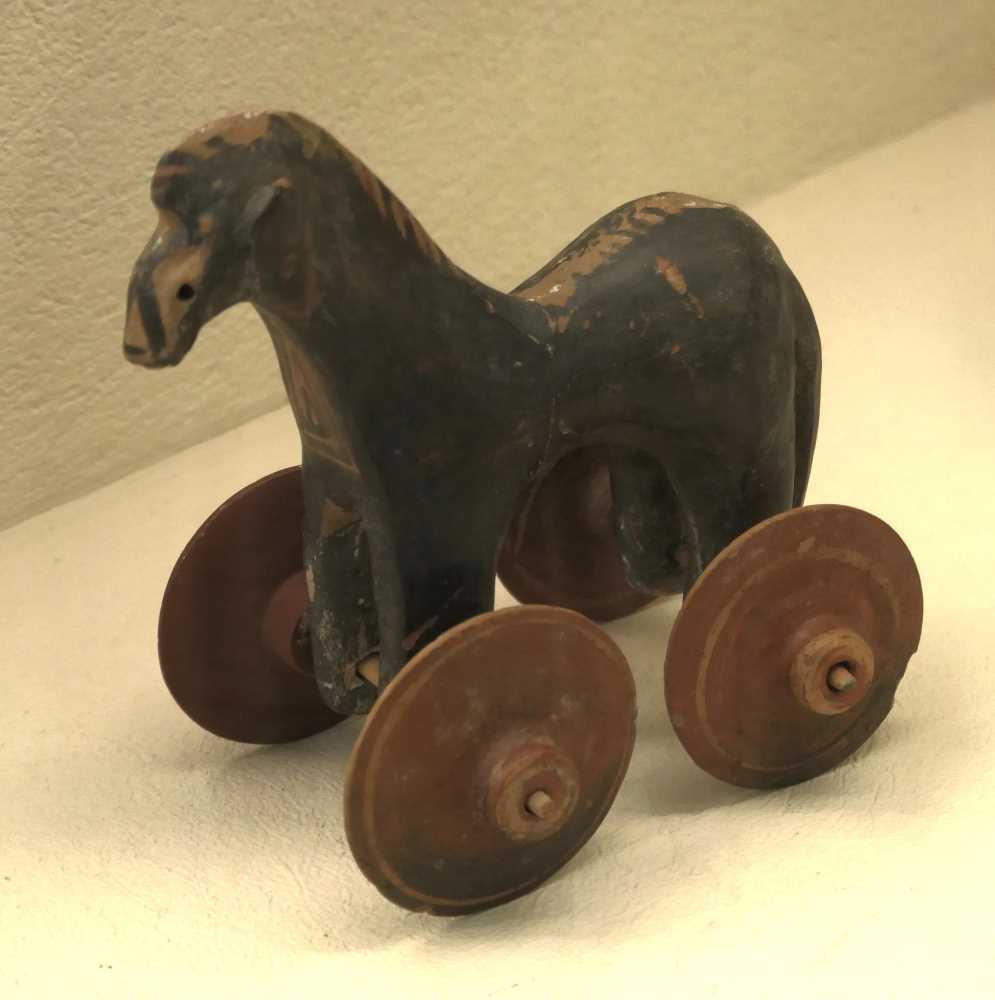
3b1. Toy horse on wheels, 950-900 BC. Ceramicus Museum, Athens. Photo by author.

3b2. Clay toys with joints, classical era. Archeological Museum, Corinth. Photo be author.
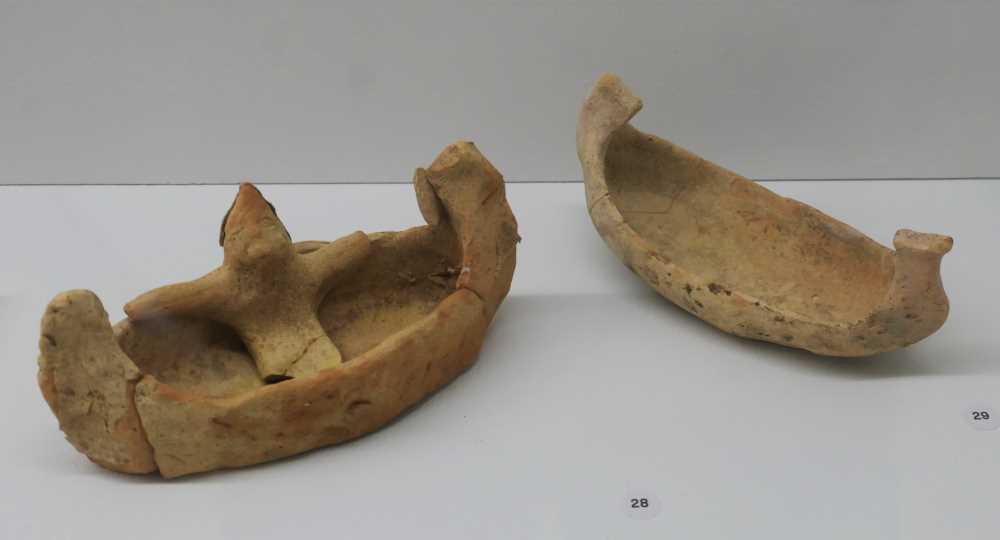
3b3. Toy boats. Terracotta, archaic period. Archeological Museum, Larnaca, Cyprus. Photo by author.
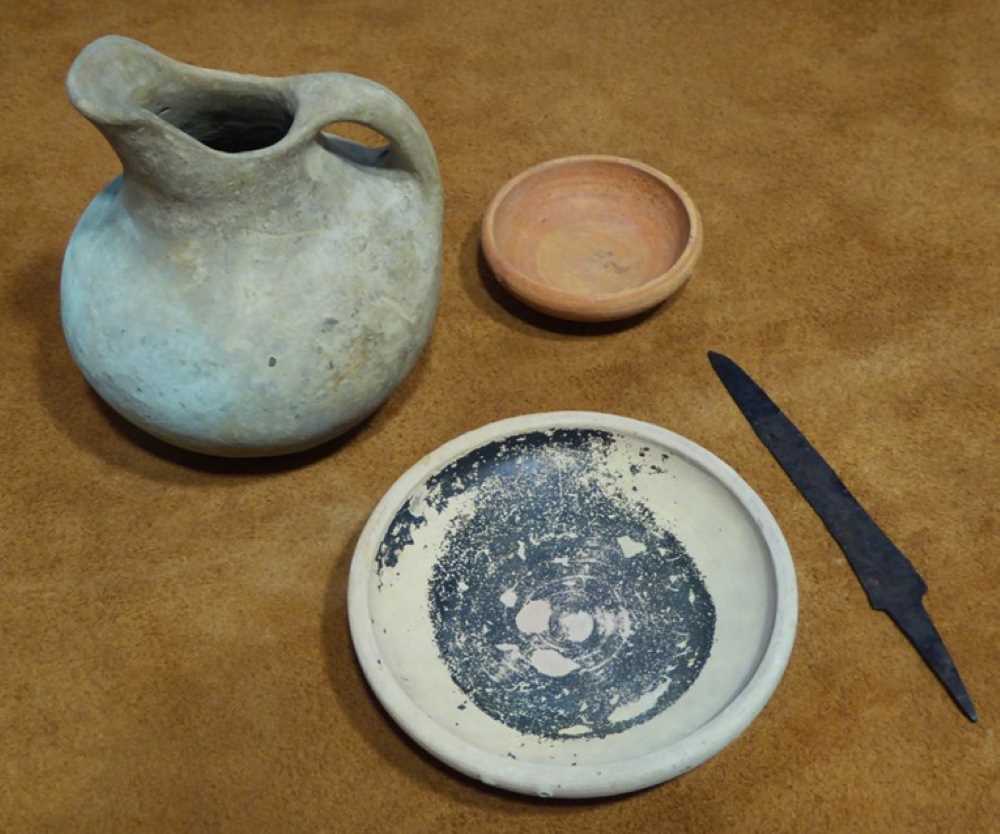
3b4. Tableware typically included a water jug, saucer, cup, and knife. Clay and iron artifacts, c. 5th century BC. Marshall Collection, Aledo, Texas. Photo by author.
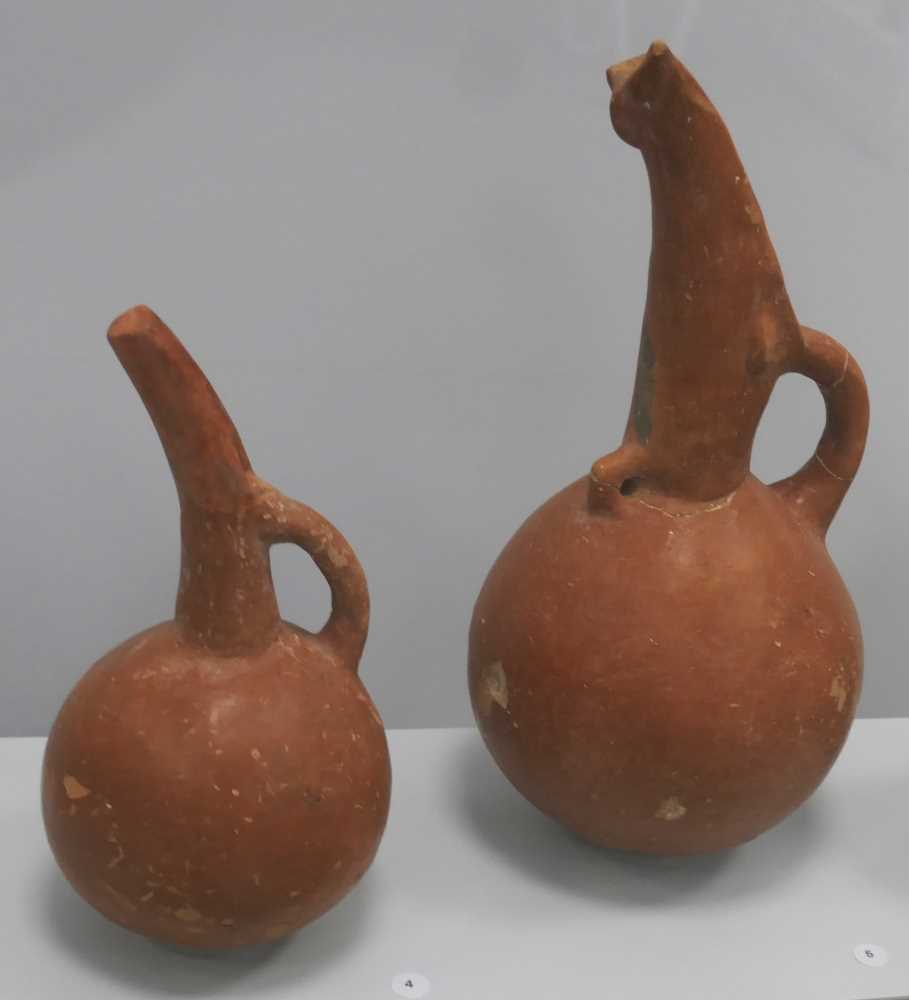
3b5. Long-necked pottery flasks, likely patterned after earlier gourd flasks. Pottery, 2400-2100 BC. Archeological Museum, Larnaca, Cyprus. Photo by author.

3b6. Brazier for coals and cooking. Clay pottery, 5th century BC. Museum of the Ancient Agora, Athens. Photo by author.

3b7. Wash basin. Clay pottery. National Archeological Museum, Athens. Photo by author.

4a1. Fishhook. Copper, 12th century BC. Archeological Museum, Larnaca, Cyprus. Photo by author.

5b1. Maiden playing a double aulos (flute). Vase painting from Athens, 520-510 BC. Getty Museum, Malibu, California. Photo by author.

5b2. Rhea holding a tympanum (drum). Terracotta statuette. Archeological Museum, Heraklion, Island of Crete, Greece. Photo by author.
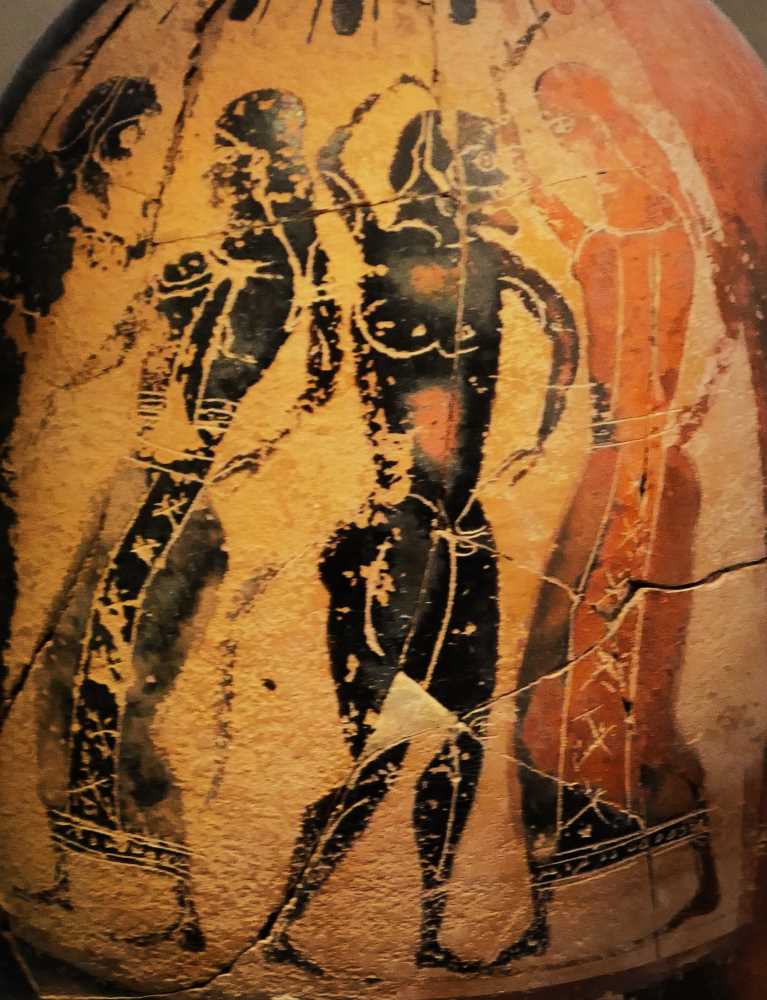
5b3. Dance scene. Vase painting, 6th c. BC. Archeological Museum, Magna Graecia, Syracuse, Italy. Photo by author.

5b4. The ruins of Apollo’s Temple at Delphi, situated below the amphitheater on the slopes of Mount Parnassus. Photo by author.

6a1. The Hippocrene Spring—source of inspiration for the Muses on Mount Helicon, Greece. Photo by author.
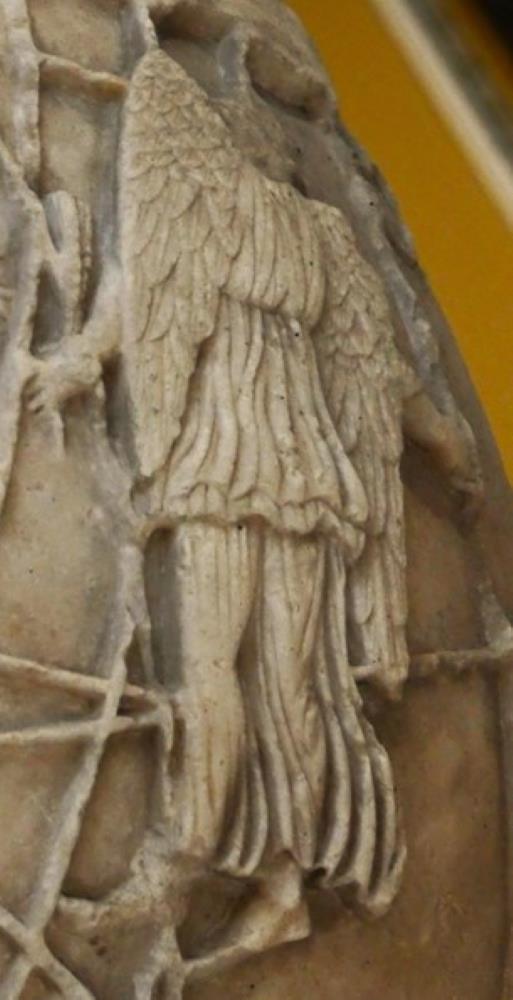
6a2. Maiden (Virgo) gazing toward Earth, depicted on the Farnese Atlas Celestial Globe. See Appendix 3. National Archeological Museum, Magna Graecia, Naples, Italy. Photo by author.
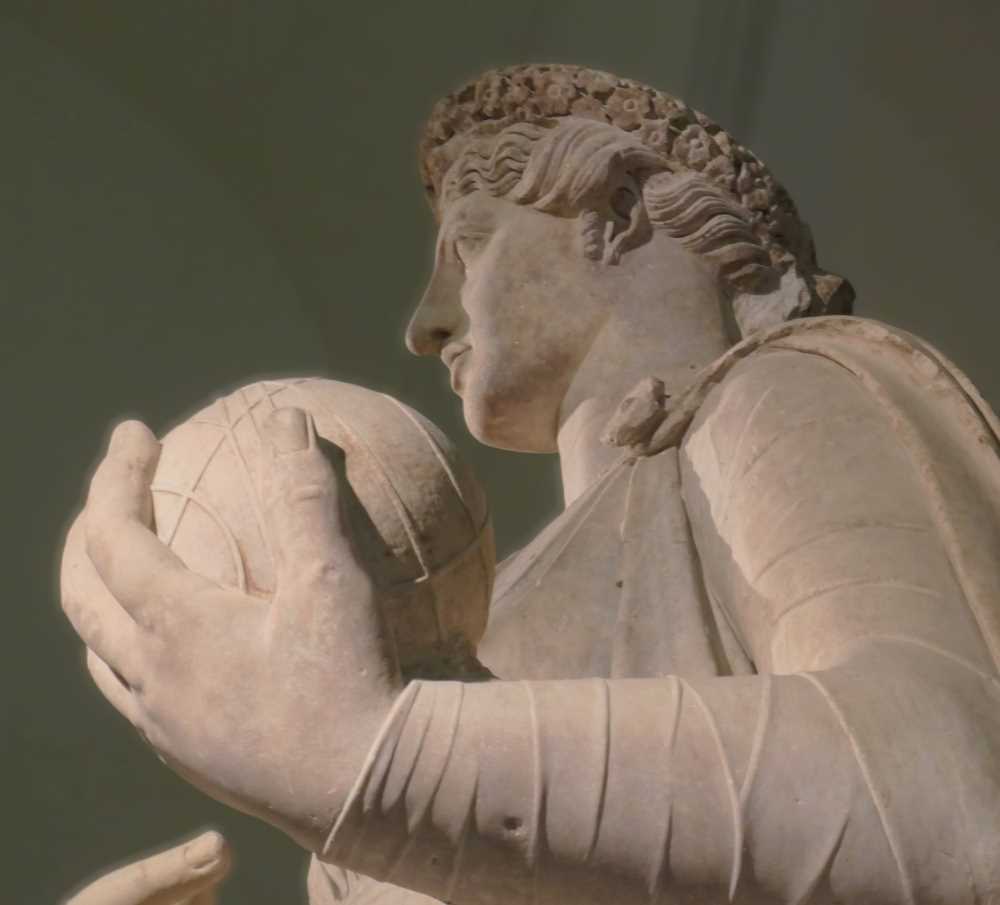
6a3. Urania—the Muse of Astronomy holding a celestial globe. Copy of a Greek original from the 2nd century BC. National Archeological Museum, Magna Graecia, Naples, Italy. Photo by author.

6a4. Archer (Sagittarius) depicted on the Farnese Atlas Celestial Globe. See Appendix 3. National Archeological Museum, Magna Graecia, Naples, Italy. Photo by author.

6b1. View from the Aulis acropolis northward to the narrow Euripus passage at Chalcis. Here, the Hellenic fleet, in c. 1200 BC, assembled and departed for Troy. Photo by author.

6b2. The Hellenic fleet landing site during the invasion of Troy. View from a 300-foot bluff above three miles of beaches near present Yenikoy, Turkey. The island in the background is Tenedos (present Bozcaada), where the Hellenes hid their ships while feigning a retreat.
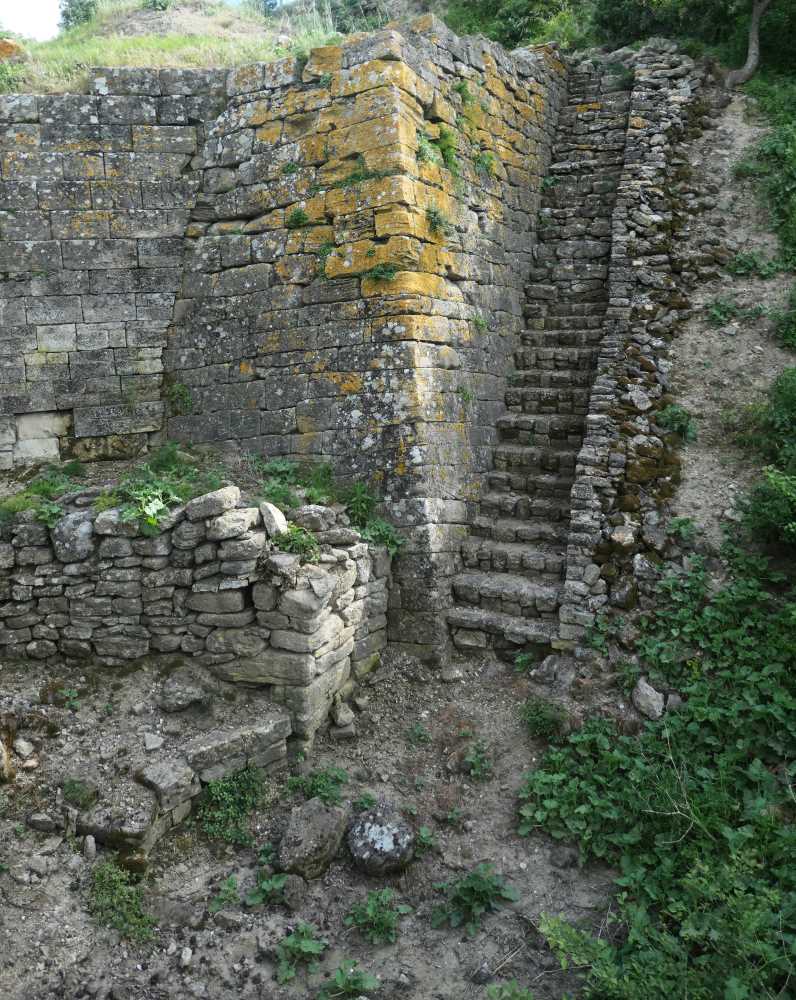
6b3. Ruins of the lower walls of Troy near present Hisarlik, Turkey. Photo by author.
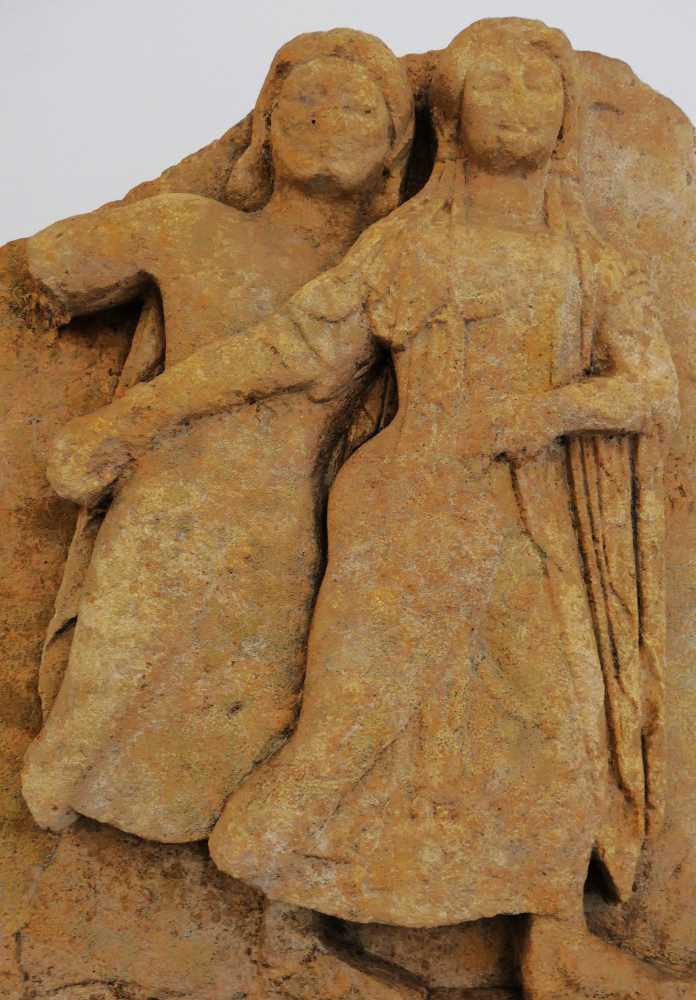
6b4. Pluto abducting Persephone on the island of Sicily. Stone relief, 6th century BC. Archeological Museum, Magna Phoenicia, Palermo, Italy. Photo by author.
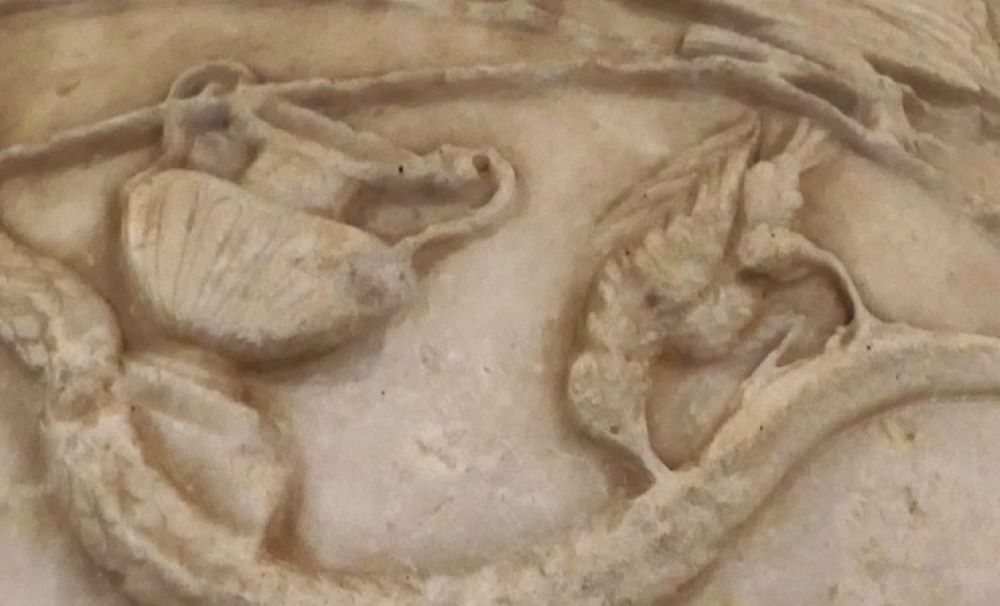
6b5. Crater and Crow (Corvus) depicted on the Farnese Atlas Celestial Globe. See Appendix 3. National Archeological Museum, Magna Graecia, Naples, Italy. Photo by author.

6b6. Feeding a serpent. Serpents served as guardians of springs, groves, and temples. Vase painting, 365-355 BC. National Archeological Museum, Magna Graecia, Naples, Italy. Photo by author.

7a1. The Temple of Athena at Priene—a Greek city on Mount Mycale that joined the Ionian Revolt against the Persian Empire. Ionia Province, Priene (in present Turkey). Photo by author.

7a2. Marathon Beach, where the Persian invading fleet landed. The mouth of Euripus Strait and the mountains of Euboea appear in the background. Marathon, Greece. Photo by author.
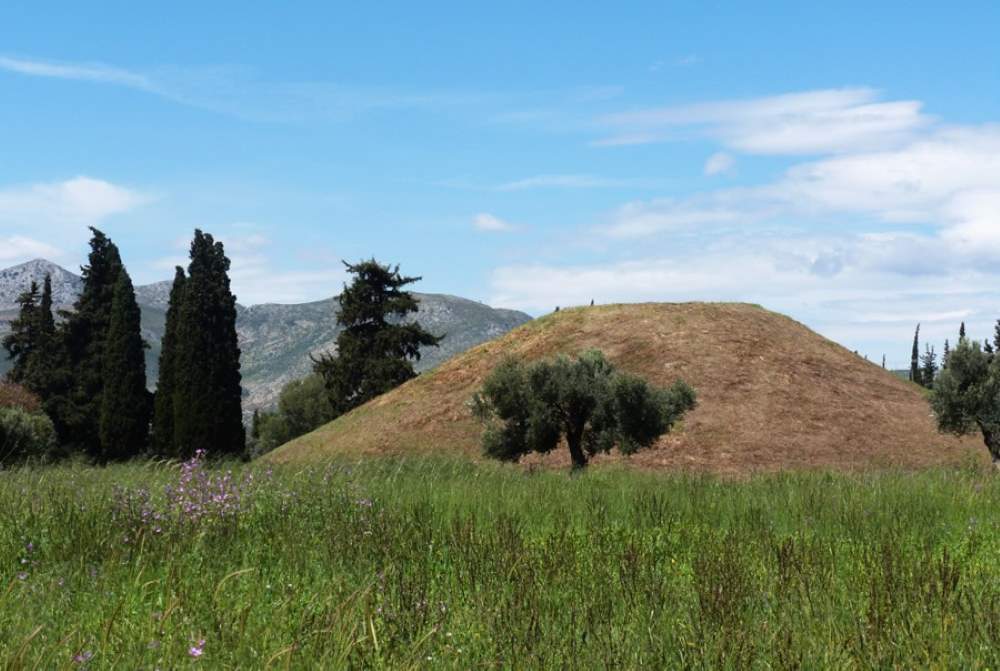
7a3. This tumulus at Marathon marks the burial site of Athenians who died defending their homeland against the Persian invasion in 490 BC. Photo by author.

7b1. At Thermopylae, a statue of a Spartan hoplite stands guard over the narrow pass between the mountains and the sea. The thermal hot springs continue to bubble and steam to this day. Photo by author.

8b1. Temple of Apollo at Corinth, 650 BC. Photo by author.

8b2. Salamis naval battle site in the Gulf of Elefsina. View from the island of Salamis, Greece. Photo by author.
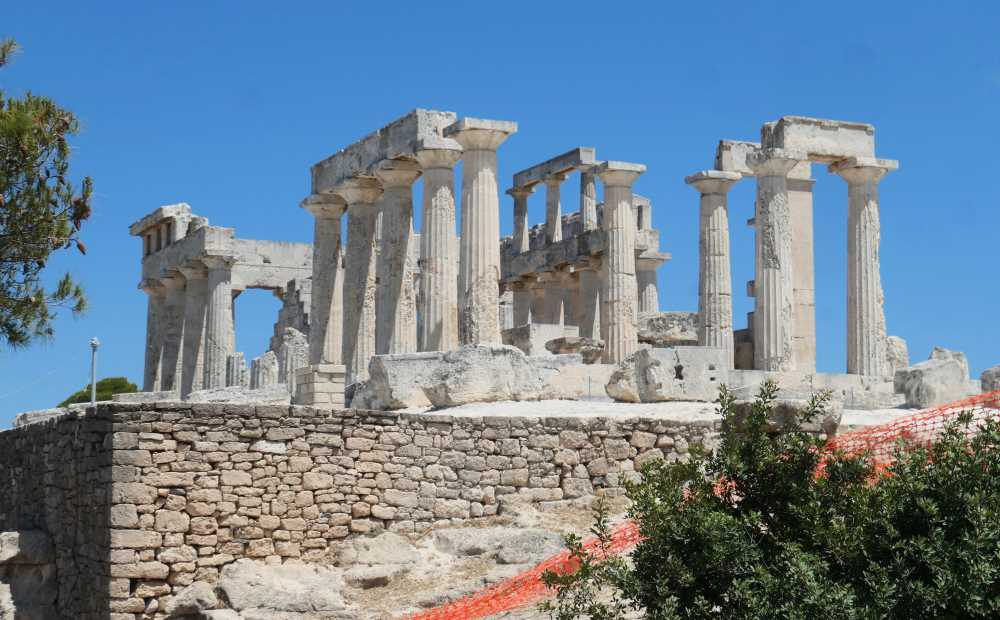
8b3. Temple of Aphaia on the island of Aegina. From here, Aeginetans witnessed the massive Persian fleet as it swarmed into the Bay of Salamis (present Elefsina) and attacked the Aeginetan, Athenian, and allied fleets. Only after the battle did the anxious families of Aegina learn the fate of their sons, brothers, and fathers. Photo by author.
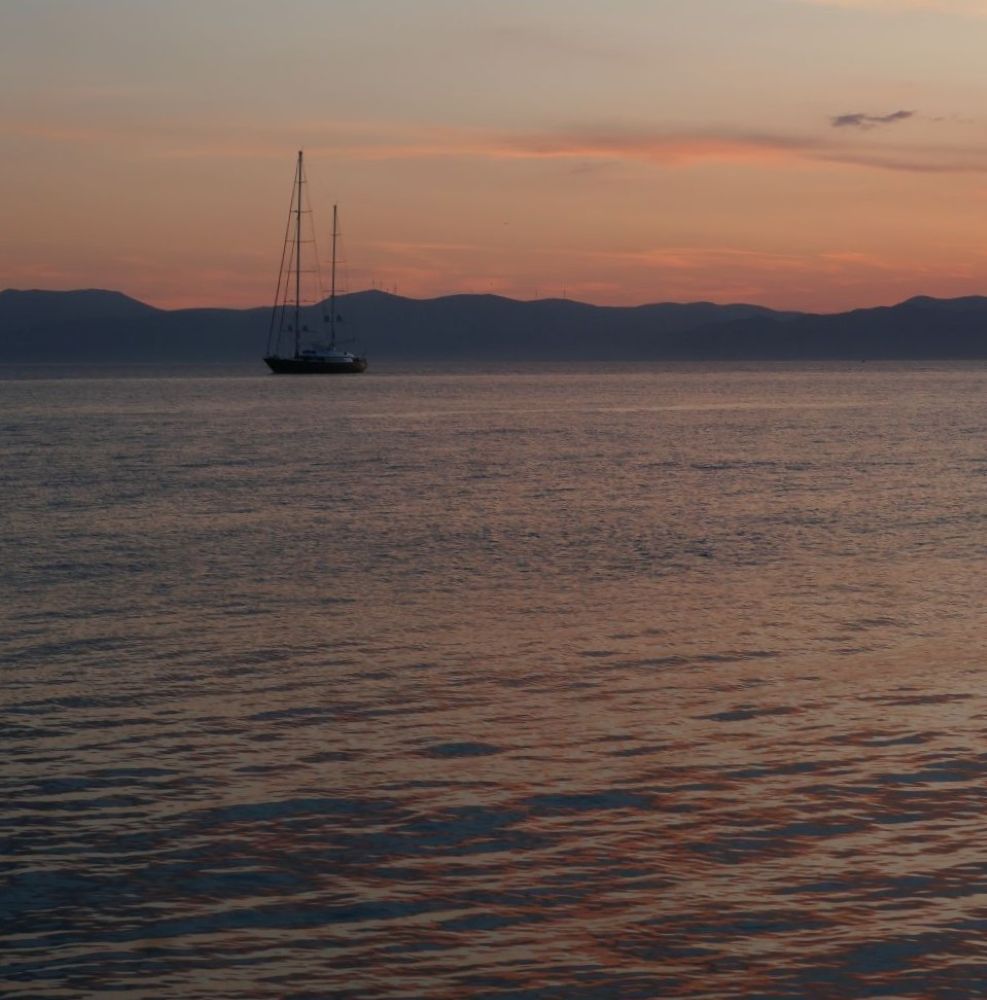
8b4. Sailing the Wine-Dark Sea near Aegina. Photo by author.
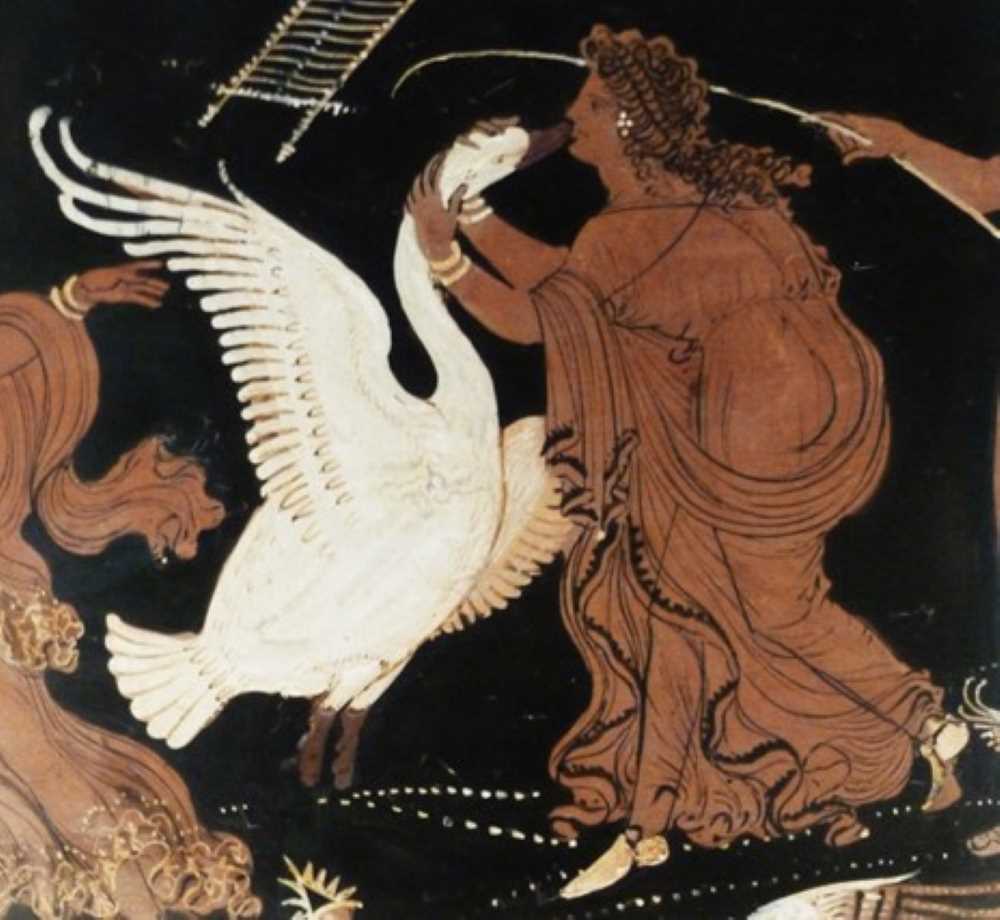
9a1. Leda and Zeus—disguised as a swan. Vase painting, c. 330 BC. Getty Museum, Malibu, California. Photo by author.

9a2. Bird (Cygnus) depicted on the Farnese Atlas Celestial Globe. See Appendix 3. National Archeological Museum, Magna Graecia, Naples, Italy. Photo by author.

9b1. Bull (Taurus) and Orion depicted on the Farnese Atlas Celestial Globe. See Appendix 3. National Archeological Museum, Magna Graecia, Naples, Italy. Photo by author.

9b2. Cypriot Bull, 14th to 13th century BC. Archeological Museum, Larnaca, Cyprus. Photo by author.

10a1. Marble Discus portraying a discus thrower, 450-425 BC. Archeological Museum, Island of Rhodes, Greece. Photo by author.
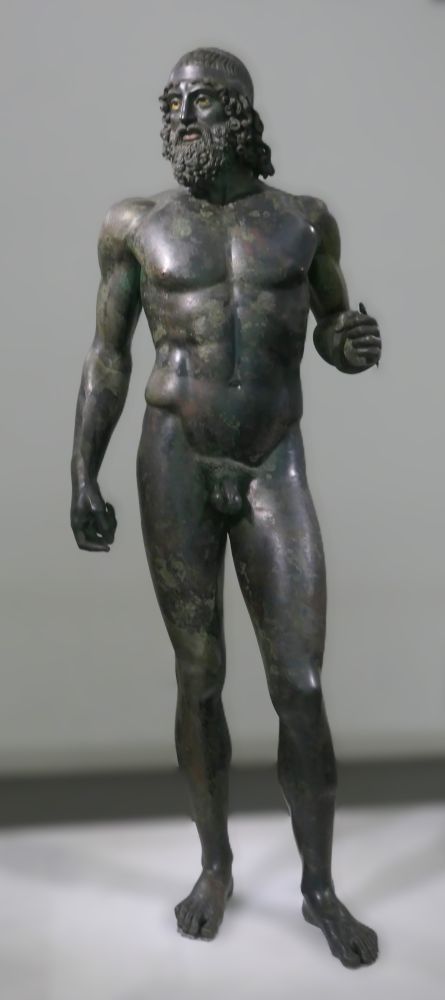
10b1. Hellenic warrior, found in the sea near Riace. Bronze statue, 5th century BC. National Museum of Magna Graecia, Reggio Calabria, Italy. Photo by author.

10b2. Aristocratic youths on their gallant steeds. Marble relief from the Parthenon, 447-432 BC. Acropolis Museum, Athens. Photo by author.
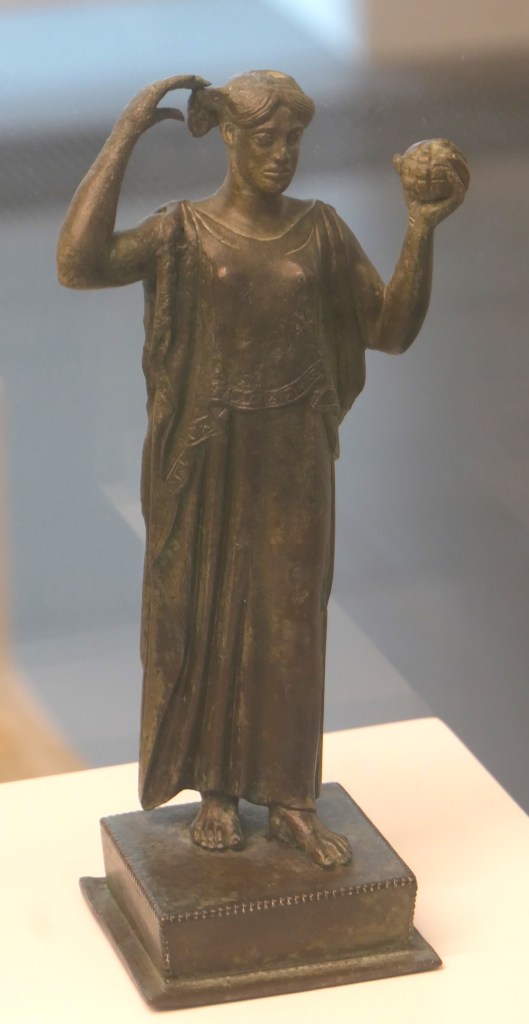
12a1. Newlywed maiden offering her toy ball to Artemis and a lock of hair to Hera as a symbol of her transition from childhood to womanhood. Bronze statuette, 470-450 BC. National Museum of Magna Graecia, Reggio Calabria, Italy. Photo by author.

12b1. Pruning Hooks from the Sanctuary of Olympia. Archeological Museum, Olympia, Greece. Photo by author.
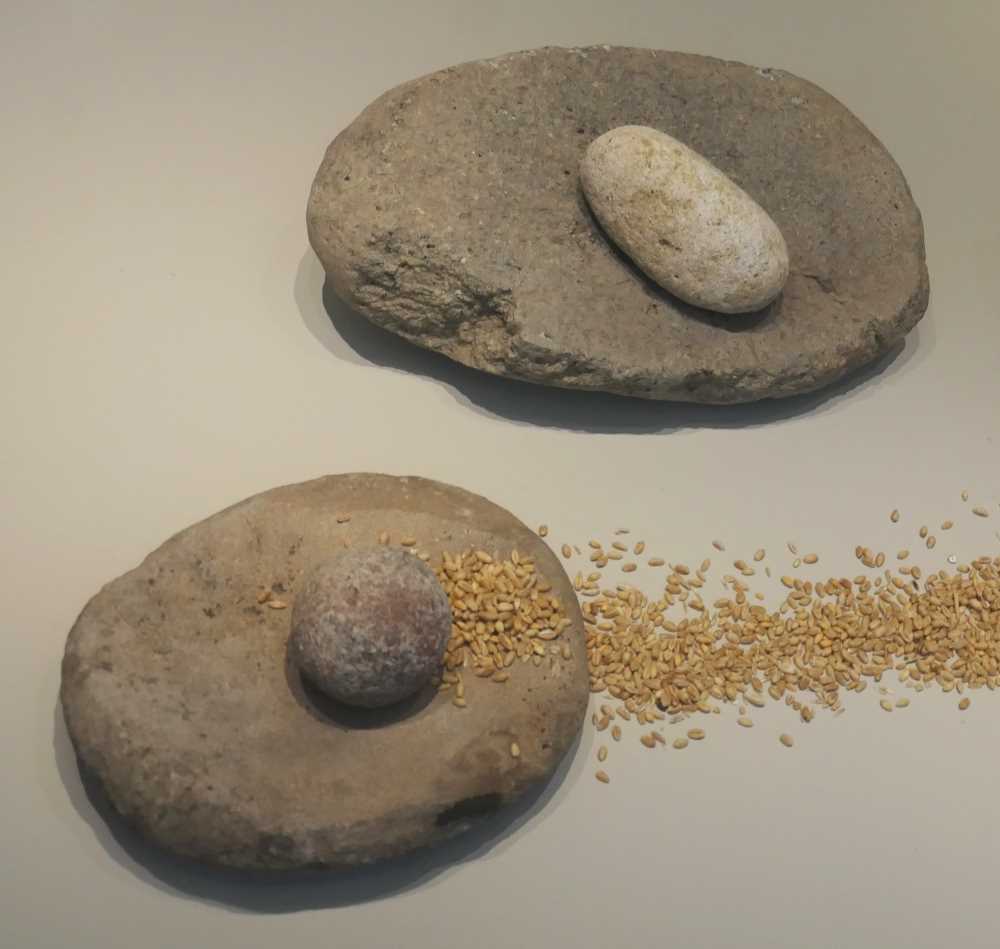
12b2. Grinding Stones, 2200-1800 BC. Archeological Museum, Pella, Greece. Photo by author.

12b3. Stones for grinding grain, 2800-2300 BC. National Archeological Museum, Athens. Photo by author.

12b4. Acropolis and harbor of Lindos on the island of Rhodes, now surrounded by medieval walls and picturesque homes. Photo by author.

12b5. Mattocks from the Sanctuary of Olympia. Archeological Museum, Olympia, Greece. Photo by author.

12b6. Rhamnous was an ancient, fortified port on Euripus Strait in northern Attica, Greece. Photo by author.
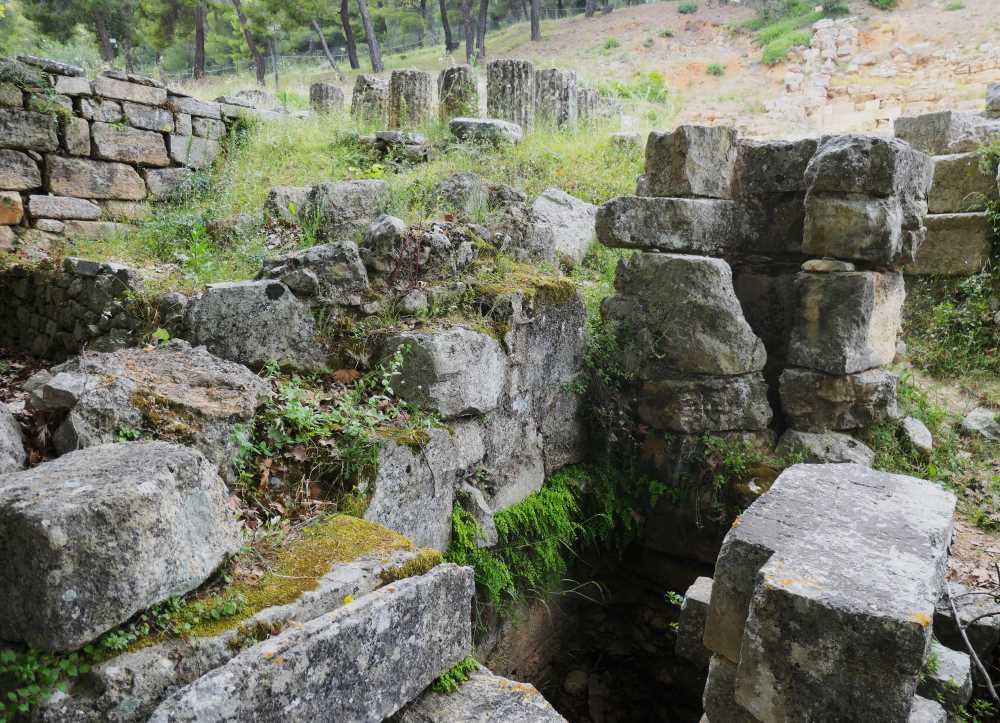
12b7. Sacred Spring marked by ferns at the Temple of the Amphiareion near Oropus, Greece. Photo by author.

13a1. Sparta acropolis with the Taygetus Mountains in the background. Photo by author.

13b1. Red Deer. Bronze, 6th to 5th century BC. Archeological Museum, Island of Rhodes, Greece. Photo by author.

13b2. A hare as a symbol of youth. Sculpture in marble, 5th to 4th century BC. National Archeological Museum, Athens. Photo by author.

13b3. Dog and Hare. Vase painting, 5th century BC. National Archeological Museum, Athens. Photo by author.

14a1. Ruins of the Athenian Agora viewed from the Temple of Hephaestus. The Acropolis looms at center and the Areopagus to the right. Photo by author.

15a1. The Parthenon on the Acropolis of Athens, 447-432 BC. Photo by author.

17a1. Phoenician ship. Cypriot vase painting, 750-600 BC. Archeological Museum, Magna Phoenicia, Palermo, Italy. Photo by author.
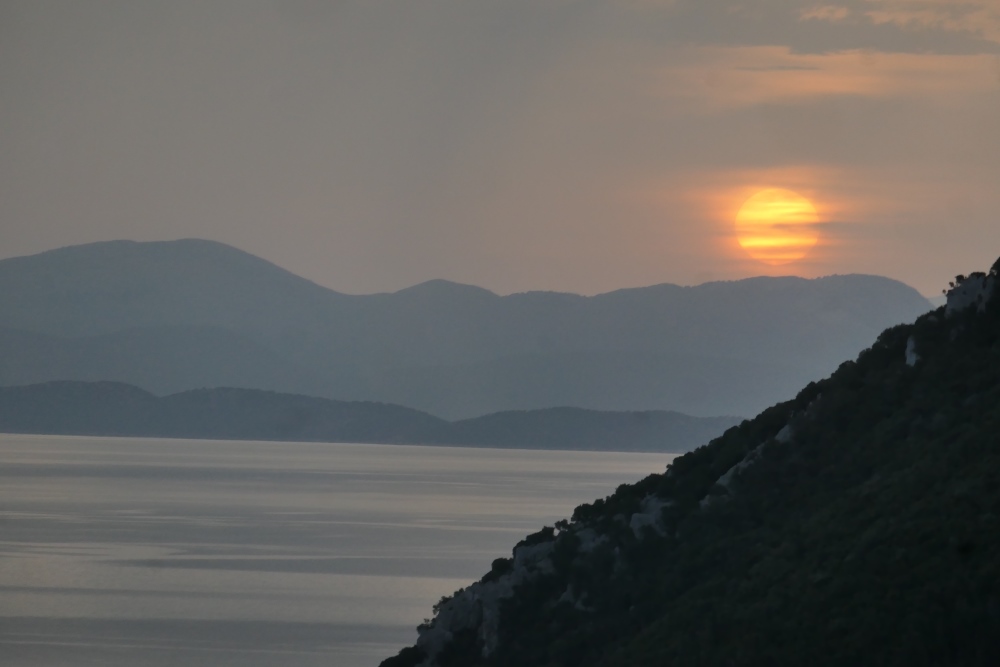
17a2. Dawn on Pilikata Hill—the acropolis of Odysseus’ island kingdom of Ithaca. Photo by author.

18a1. Horse (Pegasus), Andromeda, Perseus, Cassiopeia, and Cepheus depicted on the Farnese Atlas Celestial Globe. See Appendix 3. National Archeological Museum, Magna Graecia, Naples, Italy. Photo by author.
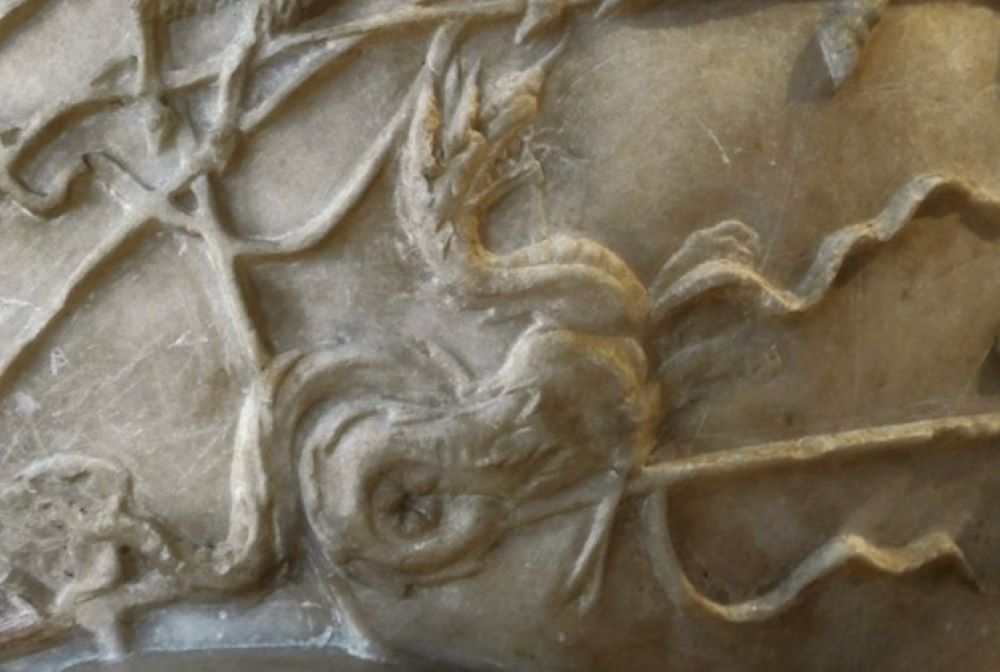
18a2. Sea Monster (Cetus) depicted on the Farnese Atlas Celestial Globe. See Appendix 3. National Archeological Museum, Magna Graecia, Naples, Italy. Photo by author.

18a3. The Mycenae acropolis in the morning light. Photo by author.

18b1. Kneeler (Hercules) depicted on the Farnese Atlas Celestial Globe. See Appendix 3. National Archeological Museum, Magna Graecia, Naples, Italy.

18b2. Lion head. Bronze, archaic era (800-495 BC), Archeological Museum, Nemea, Greece. Photo by author.

18b3. Lion (Leo) depicted in the Uranometria of Johann Bayer, 1603. Museum of History and Science Library, Oxford, England. Photo by author.
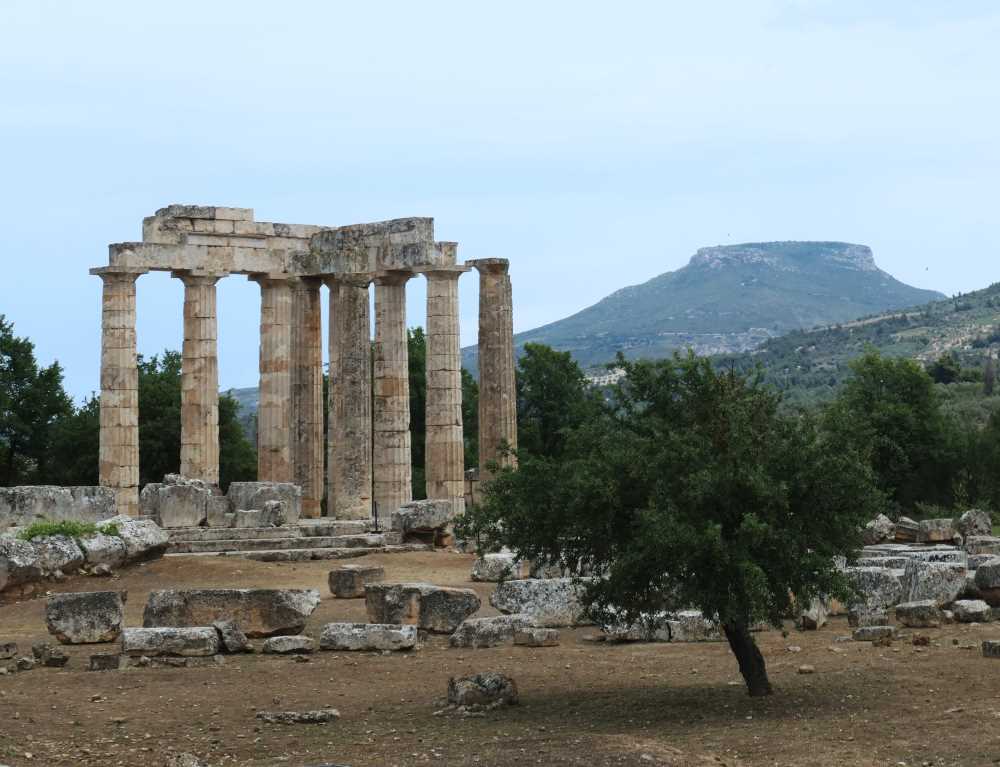
18b4. Temple of Zeus at Nemea, Greece. Photo by author.

18b5. The Stymphalia acropolis and defensive walls are atop the rocky ridge. The marsh and seasonal lake are marked by green grass and attract huge flocks of birds. Stymphalia, Arcadia, Greece. Photo by author.

19b1. Ship anchor. Rhamnous, Greece. Photo by author.

19b2. Ship anchors. Greco-Roman Museum, Alexandria, Egypt. Photo by author.

19b3. Military Pyrrhic Dance, Marble relief, 329-323 BC. Acropolis Museum, Athens. Photo by author.

19b4. Argonaut landing site at Colchis on the Black Sea, with a view of the Caucasus Mountains. Poti, Georgia. Photo by author.

19b5. Lyre (Lyra) depicted on the Farnese Atlas Celestial Globe. See Appendix 3. National Archeological Museum, Magna Graecia, Naples, Italy. Photo by author.

19b6. Orpheus with his lyre, and animals gathered to listen. Marble relief. Archeological Museum, Sparta. Photo by author.
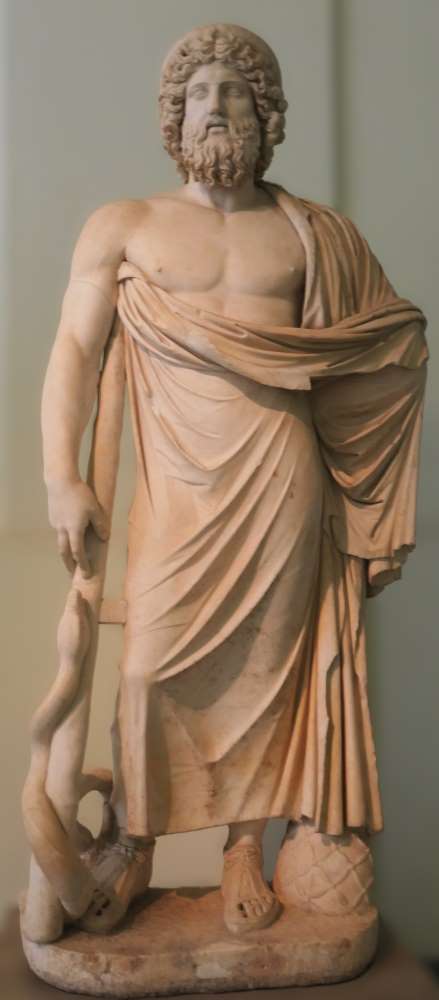
19b7. Asclepius and his healing serpent. Copy of a Greek original from the 4th century BC. National Archeological Museum, Magna Graecia, Naples, Italy. Photo by author.
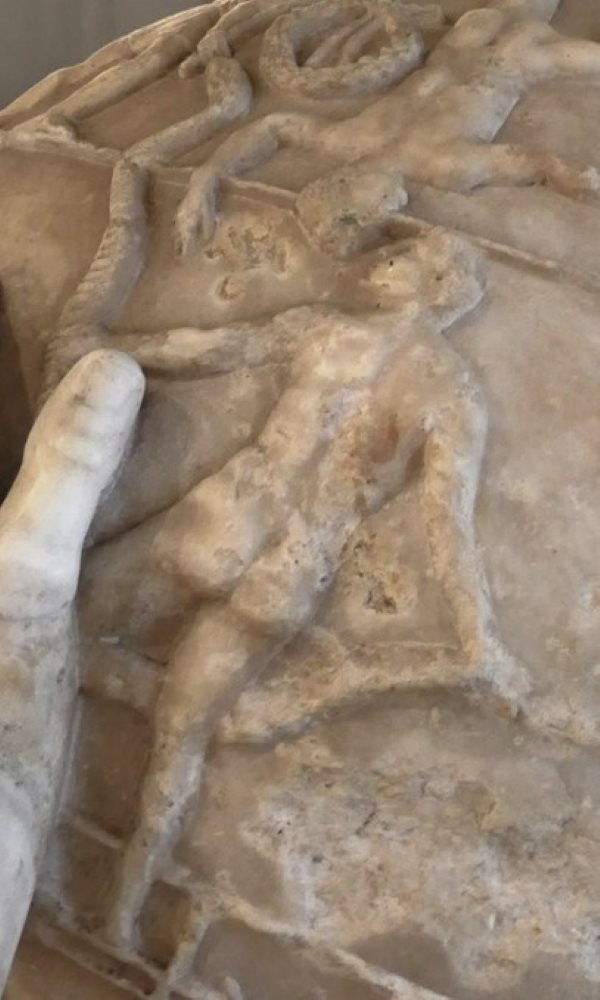
19b8. Snake Holder (Ophiuchus) and Snake (Serpens) depicted on the Farnese Atlas Celestial Globe. See Appendix 3. National Archeological Museum, Magna Graecia, Naples, Italy. Photo by author.
 David Weston Marshall